Turkey travel insurance

A trip to Turkey offers beaches, mountains, distinct cuisine and striking architecture. Discover where to go and how travel insurance can help you make the most of your trip.

Last updated: 4/3/2026

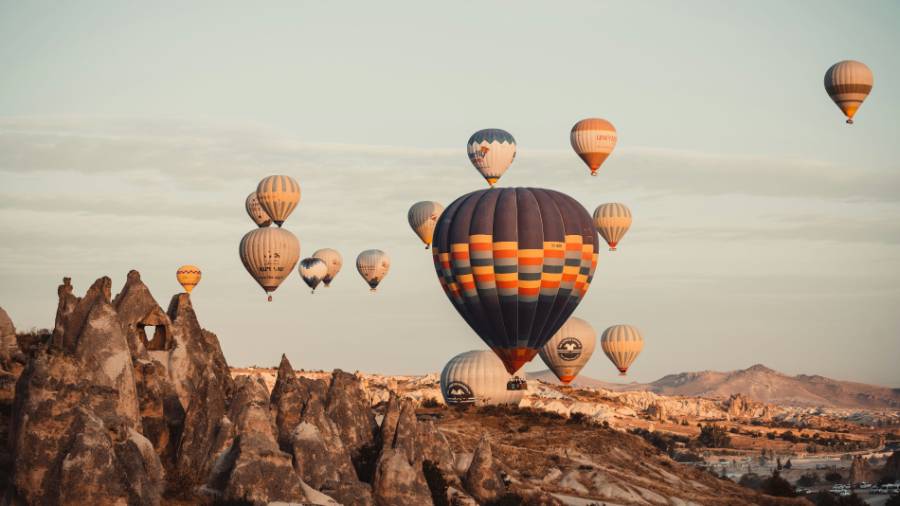
Cappadocia with hot air balloons flying around the sky

Get ready for Turkey

Turkey, or officially the Republic of Türkiye, has one of the most fascinating histories of any country worldwide, with a myriad of ancient civilisations having called it home. That history has shaped its diverse contemporary culture, so that Turkey is a country that feels ancient and modern all at once.

It has something for everyone. Shimmering beaches to bustling cities; remote and historic settlements to modern shopping. Its unique cuisine, impressive architecture, colourful bazaars and abundance of history have made it one of Brits’ favourite holiday destinations.

Before jetting off to see its many sights, make sure you’re aware of the reasons you need adequate travel insurance for Turkey.

The currency of Turkey is the Turkish lira. Before you travel, ensure you have enough of the currency in notes, or you can load it onto a prepaid travel money card.

Top places to visit in Turkey

1. Istanbul

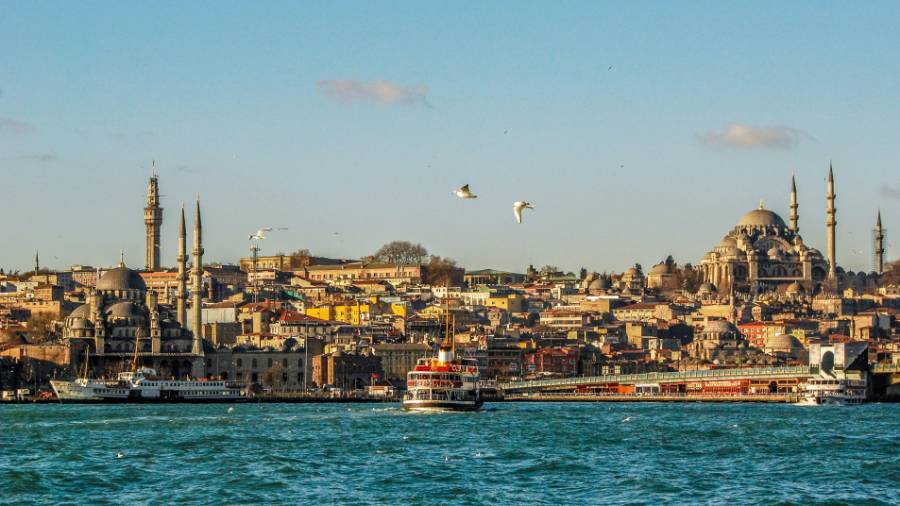
Istanbul featuring mosques and other city buildings near body of water during daytime

The city where Europe and Asia meet. Istanbul was the capital of both the Byzantine and Ottoman empires, which is why many considered it to be the centre of the world for centuries (as some still do).

Today the city is a metropolis of historic landmarks, modern cuisine, art, music, nightlife, markets and more. With no shortage of things to do and see, everyone will find something for them in this truly different city.

In the words of Turkey’s own tourism board: ‘Istanbul is The New Cool.’

2. Cappadocia

Colourful hot air balloons rise above a mountain range

This rural area of Turkey is a feast for all the senses.

Cappadocia is famed for its ‘fairy chimneys,’ pointed rock formations caused by volcanic eruptions. Over time, locals have carved homes into these quirky structures and tourists can book to stay in them for accommodation like no other.

If you want the best view of the area, take a hot air balloon. Cappadocia often has over 100 balloons in the sky at once, so there will be plenty of opportunities. Even from the ground, it’s quite the sight.

3. Antalya and the Turquoise Coast

Antalya is the perfect destination for those that want to combine beautiful beaches with historic sites. Situated on Turkey’s Mediterranean shoreline, known as the sunshine coast, guests can swim in beautiful waters before examining relics of past civilisations.

For those looking to stretch their legs, the Lycian Way is a long-distance hike with areas of historical interest dotted along the way. Prefer to have your feet up on holiday? Explore by boat instead.

Be sure to try local seafood for lunch; Antalya is famous for it.

4. Pamukkale

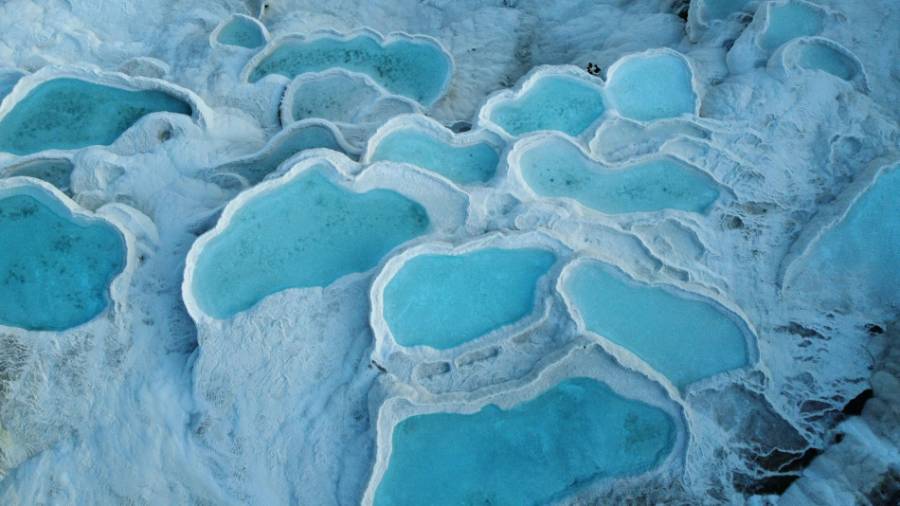
Looking down on a group of white rocks with pools of pale blue water

Pamukkale is the home of Turkey’s shimmering white travertine terraces. These natural thermal pools are saturated with calcium carbonate. When they hit the air’s oxygen, they take on a distinct blue-white colour.

The water looks so inviting you’ll want to take a dip. Thankfully, you can. Local spa resorts near the town give you the chance to soak in the mineral water. Be sure to visit the UNESCO World Heritage Site of nearby Hierapolis. The ancient spa city has ruins that remain to this day.

Put protection for your Turkey trip in place today 

5. Gallipoli

For those interested in military history, both old and new, Gallipoli has many stories to tell.

Due to its location, the North Aegean region has been a battleground for millennia. Most recently, the town hosted a famously bloody battle of WWI.

There are cemeteries dedicated to the thousands who lost their lives in this battle, but it would be wrong to characterise Gallipoli as nothing more than an old military site. It has a bucolic coastal charm and a naturally beautiful landscape which makes for a very pleasant stroll.

6. Mount Nemrut

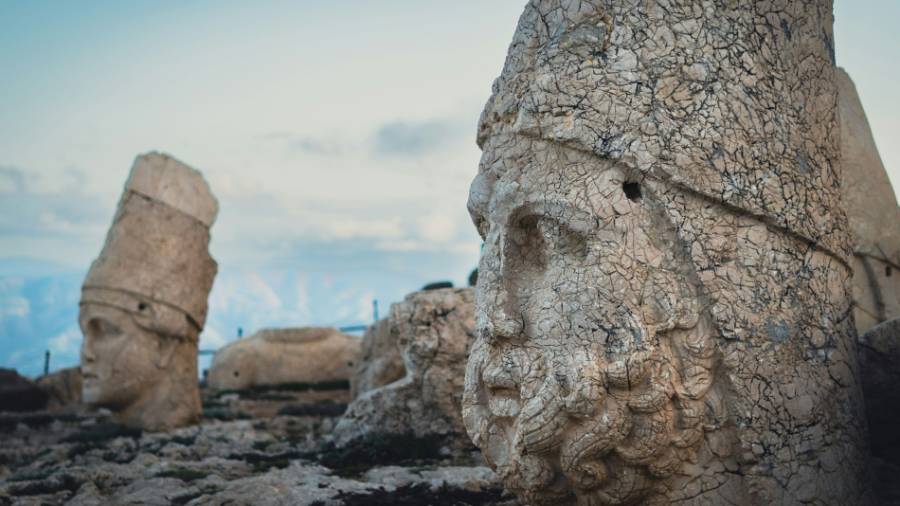
A group of large rocks shaped into heads, each in an ornate headdress

Located in Central Anatolia, Mount Nemrut isn’t one of the easiest places to get to in Turkey, but it’s certainly one of the most interesting.

The Hellenistic King Antiochus I of Commagene ordered a monument to himself to be built atop the mountain, which included colossal statues. Over time, earthquakes caused the heads of these depictions to fall off. Now they lie staring out at the world from the floor.

Tour guides usually take visitors to this site for sunrise or sunset, where you can experience the best views and feel the eerie magic of a fallen kingdom.

7. Hakkari

For mountain lovers, Hakkari is a peaceful town that is largely ignored by tourists despite its impressive landscape and variety of activities.

Hakkari offers skiing in the winter and plenty of mountaineering routes in the summer. The Cilo-Sat National Glacier Park is home to Turkey’s largest glaciers and there are lots of crystal-clear streams and waterfalls to enjoy.

Hakkari people would usually begin work before sunrise, so the local cuisine is built around nutrient-rich, high-energy foods. One example would be devin soup, made with cracked wheat, flour and red meats.

8. The Black Sea

Despite the name, the main attractions of the Black Sea region actually lie inland. Lush forests and rolling hills make this the greenest area of Turkey, with sensational hiking options in the Kackar Mountains.

There’s no shortage of streams and waterfalls for those that like to feel close to nature, and after a long day of walking you can tuck into one of the many regional delicacies, especially if you are a lover of anchovies. The small salty fish are caught nearby and are beloved by the locals.

9. Göbekli Tepe

Göbekli Tepe is the world’s oldest known temple complex, dating back over 11,000 years, making it 6,000 years older than Stonehenge.

It’s located near Şanlıurfa in southeastern Turkey and features massive stone pillars arranged in circular formations.

Archaeologists believe the area was used for religious rituals, but of course so much is unknown about this era. The carvings on the stones include animals and abstract symbols, offering a glimpse into prehistoric beliefs.

You can visit the site and its museum to learn how it’s reshaping our understanding of early civilisation.

10. Fethiye

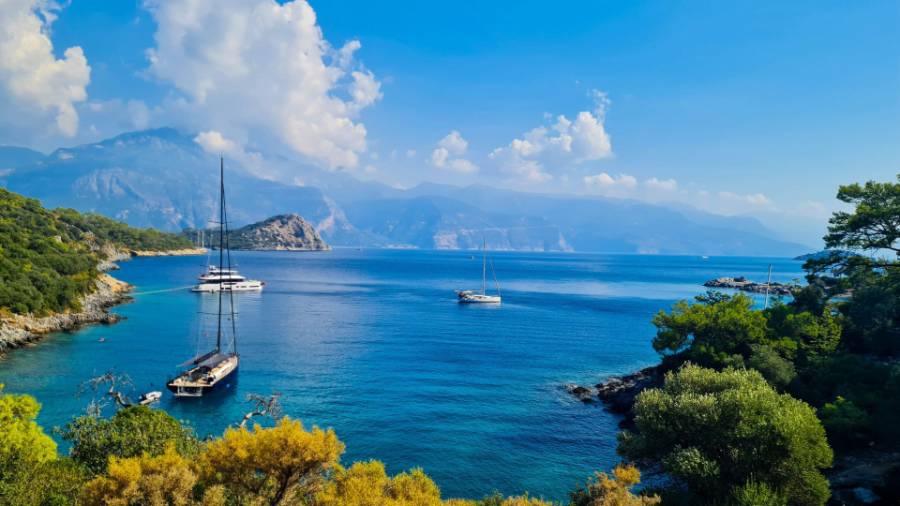
A body of water surrounded by trees and mountains photo

Fethiye is a laid-back coastal town on the Aegean Sea, popular for its turquoise waters and scenic boat trips.

It’s home to the ancient Lycian rock tombs carved into cliffs above the town, while the nearby Ölüdeniz lagoon is one of Turkey’s most photographed beaches. For thrill-seekers, you can even paraglide from Babadağ mountain and take in a bird's-eye view.

For those less keen on hurling themselves off a mountain, Fethiye also has a lively market and marina. Perfect for relaxed evenings by the water.

Do you need travel insurance for Turkey?

Having travel insurance for Turkey isn’t compulsory, but if something goes wrong on your trip, you’ll be so glad you have it. It helps you avoid high bills for emergency medical assistance, and it can also protect you against things like flight delays, lost or stolen luggage and more.

With the right level of cover in place, you’ll be able to claim back expenses or losses you incur from these unplanned occurrences up to the policy limits.

Always check what you're covered for, as different travel insurers will have different exclusions. Taking a copy of your holiday insurance policy with you means you can check spontaneous activities before deciding to participate in them. It will also have all the important contact details in case something goes wrong.

What does travel insurance cover for Turkey trips?

If certain unexpected things happen during your Turkey trip, Post Office Travel Insurance can help. Be sure to check your policy for limits and what's included in your level of cover. Our policies cover:

  • Emergency medical costs: For both illness and injury, we can help pay for your treatment and help you get back home. Our policies also include 24/7 outpatient support, meaning you can talk to a medical expert, in your own language, whenever you need them1
  • Cancelling or cutting your trip short: If you have to cancel or come home early for a reason listed in your policy, we’ll pay you back for unused travel and hotel bookings up to the policy limits
  • Lost, stolen or damaged belongings: This includes your suitcase, passport or money. Check the cover limits and make sure you report any loss to the police within 48 hours, as you’ll need to provide us with a police report
  • Missed or delayed flights: If your international transport is late or you miss it, we’ll cover the cost (for certain reasons, up to policy limits, with certain cover levels; check your policy for more information)
  • Personal accidents and legal costs: If something serious happens, we can help with legal fees and personal accident claims, up to the policy limits

What’s not covered?

We’re always as transparent as possible in terms of what’s not covered with your policy. You won't be able to claim if any of the following apply:

  • You don’t tell us about a pre-existing medical condition when you take out your policy. You can still get insurance with a medical condition, in fact we consider all pre-existing conditions. But you do need to make us aware when you take out a policy
  • You do particular sports not covered in your policy. We cover more than 100 sports, but certain activities like base jumping, quad biking and slacklining aren’t included. You can find the full list in our policy and remember to follow all safety guidelines as provided
  • You need medical assistance, cause damage or lose your possessions because of alcohol
  • You break the law or go against local guidance abroad
  • You miss a flight by mistake, such as sleeping through your alarm

Everything is outlined in your policy, so always check it carefully so you know what is and isn’t covered.

Put protection for your Turkey trip in place today 

Optional extras

You can add specific cover to your policy to add further protection. Options include:

  • Gadget cover: Protect phones, tablets, laptops and other devices while you’re away
  • Excess waiver: So you don’t have to pay the first part of a claim
  • Trip disruption: If natural catastrophes, terrorism or airspace disruption cause your trip to be cancelled or partly cancelled, you can claim the cost of hotel and travel bookings, up to the policy limits
  • Extended trip cover: If you want longer trips on an annual policy
  • Cruise cover: Most cruise providers will insist on specific cruise insurance. Add it on to your policy if you’re taking a cruise

Adding these extras enable you to match your policy to your plans.

Healthcare and vaccinations

Medical care in Turkey

Turkey has a mix of public and private healthcare providers, both of which are available to tourists. Should you need to see a medical professional in Turkey, you’re in good hands, but having insurance is the best way to avoid unwanted medical bills.

If you’re taken to a hospital, the Foreign, Commonwealth and Development Office (FCDO) page for Turkey recommends contacting your insurance provider promptly. The FCDO has also published a list of medical facilities where some staff will speak English.

In emergency situations, Post Office Travel Insurance has a UK-based medical line which is open 24/7/365. For non-emergency situations we offer Medical Assistance Plus, enabling you to contact an English-speaking doctor via video call, at your hotel or to a local facility. Medical Assistance Plus1 is also available 24/7/365 for trips taken outside of the UK.

Recommended vaccinations

Vaccinations are not a requirement to enter Turkey, but certain vaccinations (or boosters) are recommended for travellers. These include:

  • Hepatitis A
  • Tetanus

Additional vaccines may be advisable depending on where you’re going and what you’re planning to do. Visit TravelHealthPro for up-to-date advice.

Entry requirements

UK passport holders can enter Turkey visa-free for up to 90 days in a 180-day period. Make sure to check the expiry date of your passport before you travel, as it must be valid for at least 150 days from the day you arrive.

Check the FCDO Turkey page for the latest rules.

Staying safe in Turkey

First things first, the emergency number in Turkey is 112. It’s not a bad idea to save it in your phone, as you might not be thinking too clearly if you need to use it.

If you’re in populated areas, pickpocketing can occur. To make sure you’re staying safe when you’re on the move, follow the advice in our guide to avoiding holiday scams. If you’re visiting one of Turkey’s many beautiful beach resorts, then take care to protect your valuables by following these simple tips for protecting valuables on beaches.

In terms of your health, Turkey has an abundance of stray animals, particularly cats and dogs. While the cat that jumps onto your café table may seem cute, animal-borne diseases and parasites such as fleas are present in Turkey. It’s better to keep your distance.

Travel risks in Turkey

In recent years Turkey has seen an increase in the number of demonstrations and protests in Istanbul and other cities across Turkey. The FCDO page for Turkey advises staying away from demonstrations as they have been known to become violent.

The FCDO also advises against travel to anywhere within 10km of the Turkey-Syria border. There is ongoing fighting in this area and an increased risk of terrorism. Travelling to this area is likely to invalidate your insurance cover. Be sure to check the FCDO page before you travel for the most up to date advice.

How much do things cost in Turkey?

The currency in Turkey is the Turkish lira (TRY). Turkey is generally considered to be an affordable place to visit.

According to data collected by Numbeo, here are some average prices, accurate as of February 2026:

  • Meal at inexpensive restaurant: Approx 350 TRY (£6.34)
  • Three-course meal for two (no drinks): Approx 1800 TRY (£30.41)
  • Regular cappuccino: Approx 146.62 TRY (£2.47)

You can organise your travel money with Post Office before your trip.

Turkey is keen to become a cashless culture and cards are accepted in many environments. If you want to pay by card without the high conversion fees that banks often charge, you can order a prepaid multi-currency travel card from Post Office. This allows you to purchase a set amount of Turkish lira to spend throughout your trip with no charges. If you want to top up your card, you can easily do so through an app or online.

Prefer cash? You can exchange money over the counter at your local Post Office branch, or order Turkish lira online and we’ll deliver the cash to your address. Read our tips to make your travel money go further.

Getting around

Turkey has a growing transport network, reliable for inner-city mobility as well as cross-country journeys:

  • Metro and tram: If you’re exploring big cities like Istanbul or Ankara, take advantage of tram and metro services. These easy-to-use networks enable you to see everything you want to see, as not everywhere is walking distance
  • Domestic flights: If you’re visiting multiple locations in Turkey which aren’t close by, domestic flights may well be your cheapest and most comfortable option. A 15-hour bus can take just one hour by flight. Competition between providers keeps them affordable
  • Trains: Turkey has an impressive high-speed train (YHT) network connecting most major cities. It’s best to book tickets in advance as they can sell out
  • Buses: Turkey also has an extensive bus network which is the best option if you’re sticking to a budget. The downside? Delays on long journeys are common, due to the amount of road users Turkey has
  • Taxis and rideshares: Taxis are widely available in Turkey, and you can book a registered yellow taxi with apps such as Bitaksi

Cultural considerations

Turkey has become a more conservative country in recent years but it’s still a largely secular and liberal place. Always be respectful of local customs. Wear appropriate clothing and covering up when visiting mosques or religious sites.

It’s an offence to damage Turkish currency and being disrespectful to the Turkish nation or its flag can come with heavy penalties. If in doubt, try not to engage in political discussion. Be careful about voicing thoughts that might be considered as insulting or offensive.

Turkish culture is very sociable and you shouldn’t be concerned by people wanting to engage you in conversation. Food, coffee and tea are great ways to find out about Turkish social life. There are also less conventional social experiences like hammams (traditional Turkish baths).

Key takeaways

  • Turkey offers a mix of history, beaches and adventure. There will always be somewhere new to explore
  • Travel insurance is essential for peace of mind, helping to cover healthcare costs and your belongings while you travel, up to the limits in your policy
  • Always check FCDO advice and entry rules before you go and consider local customs
  • Stay alert to the possibility of pickpockets in populated areas
  • Tailor your insurance to suit your trip

1 Medical Assistance Plus is not available for trips taken in the UK, only for international travel. The service allows up to 3 separate medical events per person listed on the policy, and up to 3 appointments per event. All appointment charges are covered by your travel insurance policy. You will not need to pay any excess fees for this service. You may need to pay for your prescription upfront and claim on your return home.

Make sure you’re covered on your Turkish adventure

Common questions about travel to Turkey

  • This can vary by travel insurance provider. Some, including Post Office Travel Insurance, class Turkey as part of Europe in their policies even though it’s not part of the European Union. Others consider it outside Europe, including it in their worldwide cover instead. Whichever provider you go with, make sure you check to be sure.

  • The FCDO advises getting insurance for trips to Turkey. Remember that EHIC and GHIC cards aren’t valid in Turkey. Even small emergencies can end up costing a lot of money. You’ll be allowed entry into Turkey without insurance, but you’d be putting yourself at huge financial risk.

    Besides medical expenses, travel insurance can also protect you in other situations. Flights can be delayed, your luggage can get lost, stolen or damaged. Tourist areas can have opportunist thieves who might target your belongings.

    You’ll hopefully never have to claim on your travel insurance, but it’s a safety net that allows you to enjoy your holiday without worrying about what might go wrong.

  • You’ll want to be covered if you require any medical assistance when you’re in Turkey, through illness or injury. The level of cover you choose should be sufficient to reimburse you for the holiday if it’s cancelled for one of the reasons set out in the policy wording. Make sure it will also reimburse you for the cost of lost, damaged or stolen belongings.

    It’s also important to think about what you plan on doing on your trip. If you’re planning on particular sports, you may need specialist cover. Or if you’re going on a cruise, you’ll need to add cruise cover to your policy.

    If you’re travelling more than once in a year, you might want to consider annual multi-trip cover. It’s slightly more expensive but covers you for any trip you take for 31 days or less over the next year. Visit our travel insurance page for more information about our policies and what they cover.

Related travel products

  • Foreign currency

    Order travel money online or in selected branches. Pick up in any branch or get it delivered to your home

  • Travel money card

    The savvy way to spend abroad. One prepaid Mastercard you can top up any time with up to 22 currencies

  • Passport Check & Send

    Get your passport application right the first time. We can even complete and submit it for you digitally