Morocco travel insurance

Perched on the northern tip of Africa, Morocco’s long been a popular destination for UK holidaymakers. If you’re heading there soon, make sure you’ve got good travel insurance to cover you.

Last updated: 4/3/2026

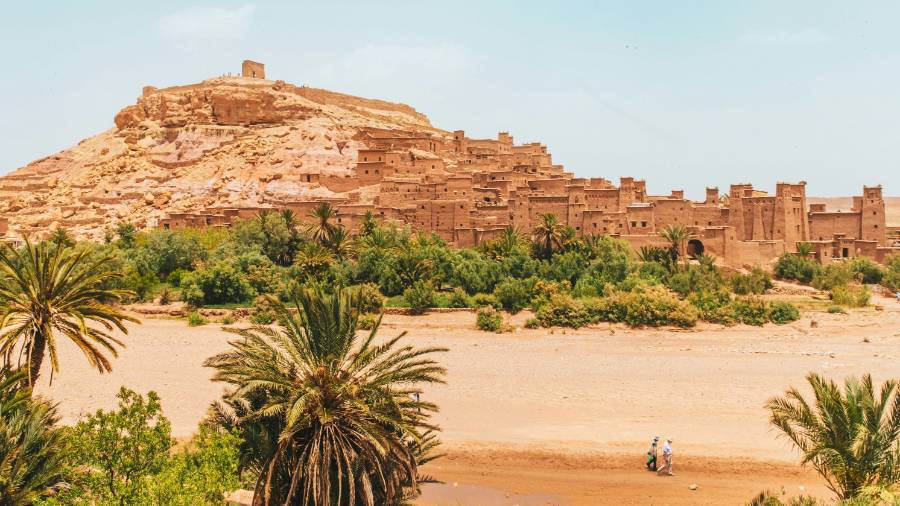
Ait Ben Haddou, a brown dessert stone hillside city in Morocco

Get ready for your Moroccan adventure

From the winding alleys of Marrakech to the golden dunes of the Sahara, Morocco is a feast for all the senses. Its mix of Arab, Berber and European influences makes it one of North Africa’s most captivating destinations.

To make the most out of a country which has so much to offer, it’s important to prepare well. That includes everything from sorting your travel insurance before you go to understanding local customs. We can help with that.

Top 10 places to visit in Morocco

If you’re looking for a city break, a beach holiday or some trekking through the mountains, or perhaps all three, Morocco has got you covered. Here are some of the highlights:

1. Marrakech

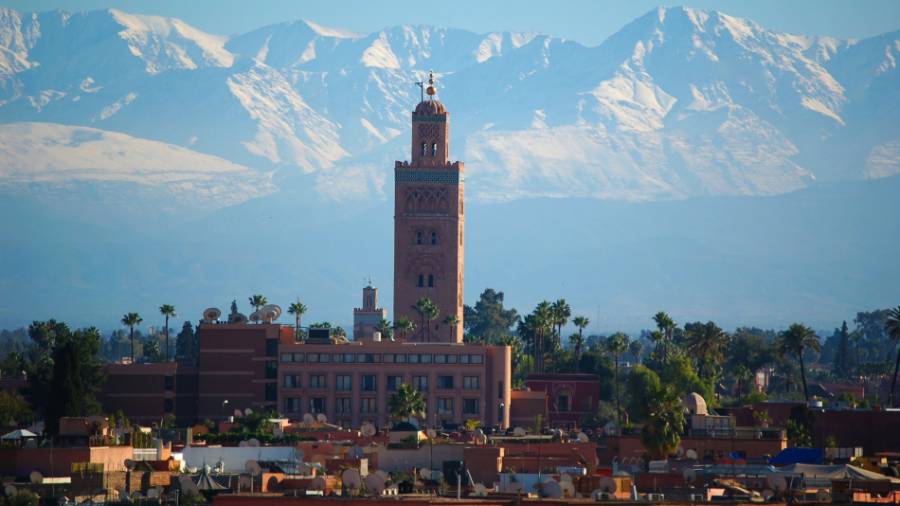
Cityscape of Marrakech on a bright day with mountains behind

Known as the ‘Red City’, Marrakech is famous for its vibrant souks, palaces and gardens. Enjoy the charm of this ancient city, weaving through striking architecture and street food vendors, while admiring the artisan work of local merchants.

For a cultural experience, visit a local hammam for ultimate relaxation, or enjoy the sunset at the famous Jemaa el-Fnaa.

2. Fes

If you’re looking to feel what Morocco was like in times gone by, Fes is the place to go. The country’s oldest city has a medieval medina which will enable you to get lost amongst workshops and apothecary stalls, while the Kairaouine Mosque and University houses the world’s oldest library.

Nearby is Volubilis, 40 hectares of Roman ruins and a UNESCO World Heritage Site, offering an insight into Roman life that not many spots in the world can match.

3. Sahara Desert

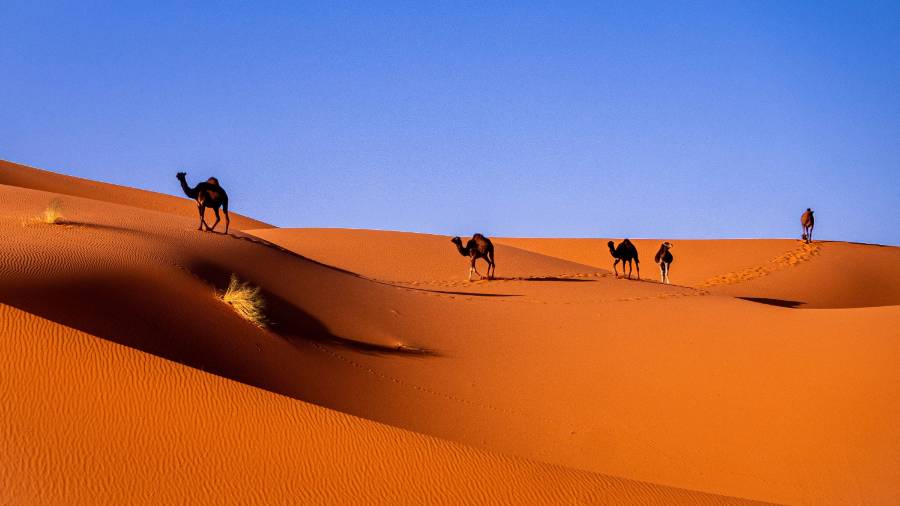
Camels in a desert in bright blue sky

Experience the unique feeling of being truly in the middle of nowhere. The Sahara Desert offers visitors the chance to gaze at nothing but sand for as far as the eyes can see, being the world’s largest hot desert.

If that sounds a bit boring for your liking, think again. You can ride camels across the dunes or go for a more modern twist and opt for a 4x4. For star lovers, it’s an absolute must, as the sky lights up at night, miles from any form of light pollution.

4. Atlas Mountains

If you prefer to get your steps in on your trips abroad, Morocco’s Atlas Mountains will have great appeal. North Africa’s largest mountain range offers breathtaking views of snow-topped peaks and winding valleys.

Hike through traditional Amazigh villages and observe how this mountain community lives, working the land in a way that has been predominantly unchanged for millennia. The Amazigh are famously welcoming to visitors, so you may be offered to share a peppermint tea with a local. You can also opt to book an experience with an Amazigh family, baking bread and making pottery.

5. Essaouira

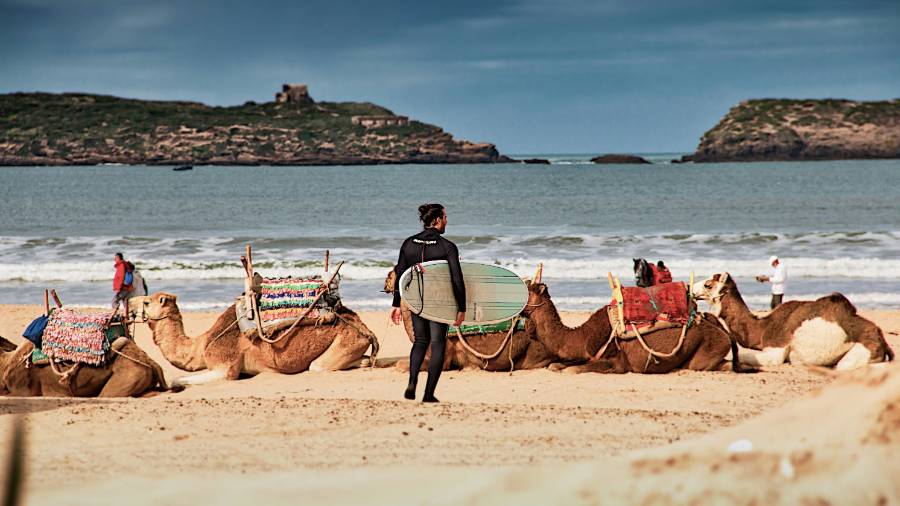
Surfer on beach with camels

If you’re looking to relax by the sea, look no further than Essaouira. The coastal city combines an active watersports scene with fantastic local seafood, traditional markets and riads.

There’s also the annual Gnaoua World Music Festival, attracting an artistic crowd which stick around to enjoy the city’s many galleries and artisan stores. It’s known for being windy (hence the kitesurfing), but if it gets too much for the beach, many hotels sell pool passes for non-guests. No need to get sand in your cocktail.

6. Meknes

If you want Moroccan culture while avoiding the crowds, you should consider a trip to Meknes. The city’s medina is more relaxed than Marrakech and Fes, making it easier to explore.

The city was once the capital under Sultan Moulay Ismail and it boasts impressive gates, palaces and granaries. Don’t miss Bab Mansour, one of Morocco’s most ornate gates, and the Mausoleum of Moulay Ismail.

7. Chefchaouen

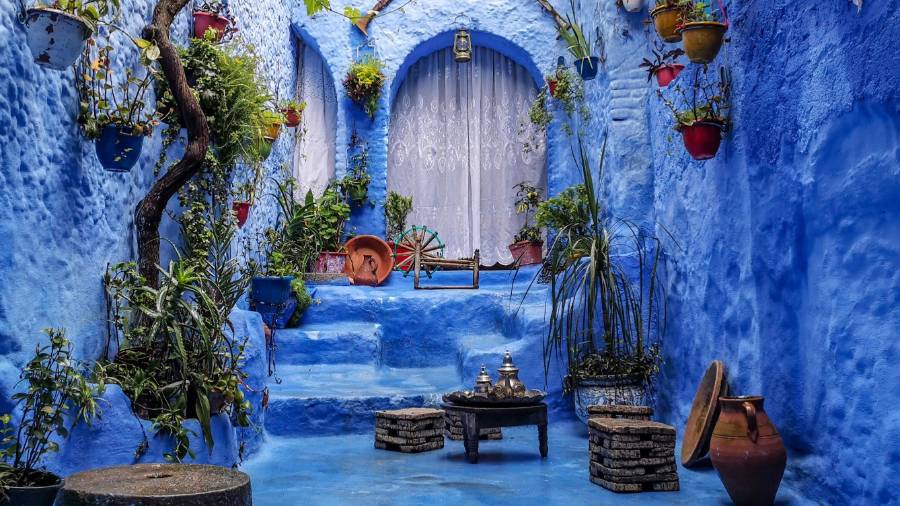
A bright blue alley with potted plants and a bench

If Marrakech is the Red City, now meet ‘the Blue Pearl’. Many of Chefchaouen’s buildings are painted a striking blue, which make exploring its mazy streets an awe-inspiring (and photogenic) experience.

You might want to purchase some local wares, from blankets and jewellery to hats and shawls, or just soak up the atmosphere. Chefchaouen is an ideal day trip to experience a beautiful and buzzing corner of the world.

8. Oualidia

Oualidia is a peaceful coastal town known for its tranquil lagoon, fresh seafood, and laid-back vibe. While the beaches of Agadir and Essaouria are lively, Oualidia offers a more secluded experience, ideal for swimming, kayaking, or birdwatching.

The town is famous for its oyster farms, and many restaurants serve them fresh with lemon and local wine. It’s a popular weekend escape for Moroccans and a hidden gem for international visitors. The surrounding cliffs and salt marshes add to its natural charm. If you’re looking for relaxation and nature, Oualidia is a perfect stop.

9. Aït Benhaddou

People walking on brown sand near brown rock formation during daytime

If you’ve always (perhaps secretly) dreamed of experiencing a day as if you were in Gladiator or Game of Thrones, a visit to Aït Benhaddou is quite possibly the closest you can get. The village is another of Morocco’s UNESCO World Heritage sites, and its striking architecture has featured as sets for the aforementioned productions.

With historic towers built on a hillside, views at sunrise and sunset are particularly impressive. Take a stroll through this mud-brick ksar and feel like you’re in a Hollywood blockbuster.

10. The Dades Valley

If you’re planning on exploring the Atlas Mountains, The Dades Valley, is a stunning stretch of red rock canyons and lush palm groves in the High Atlas region.

It's often known as the ‘Valley of a Thousand Kasbahs’, a kasbah being a citadel or fort, which you may recognise from The Clash’s 1982 instruction to ‘rock’ the area. It’s a paradise for hikers, photographers, and anyone seeking dramatic landscapes. famous hairpin bends of the Dades Gorge. Traditional Berber villages dot the route, and many offer homestays or guided treks. Spring is a great time to visit, when the valley blooms with almond and cherry blossoms.

Put protection for your Morocco trip in place today 

Do you need travel insurance for Morocco?

While travel insurance isn’t mandatory for Morocco, it’s recommended by the Foreign, Commonwealth and Development Office (FCDO). If things were to go wrong, the last thing you need is to worry about unknown costs, and medical treatment can be expensive, especially in private clinics.

Insurance can also help make sure you’re not left out of pocket if your trip is cancelled, or your luggage is lost.

Your trip to Morocco will most likely be an amazing trip that you’ll never forget. But, as with everyday life, issues can occasionally arise when you’re abroad. Insurance helps give you that peace of mind that you won’t be coming back to the UK with a big bill to pay. Once you have a policy, you can focus entirely on enjoying yourself.

What does travel insurance cover for Morocco trips?

Post Office Travel Insurance can help if a variety of unexpected things happen while you’re in Morocco. It can cover:

  • Emergency medical costs: For both illness and injury, we can help pay for your treatment and help you get back home. Our policies also include 24/7 outpatient support, meaning you can talk to a medical expert, in your own language, whenever you’re abroad1
  • Cancelling or cutting your trip short: If you have to cancel or come home early for a reason listed in your policy, we’ll pay you back for unused travel and hotel bookings up to the policy limits
  • Lost, stolen or damaged belongings: This includes your suitcase, passport or money. Check the cover limits and make sure you report any loss to the police within 48 hours, as you’ll need to provide us with a police report
  • Missed or delayed flights: If your international transport is late or you miss it, we’ll cover the cost (for certain reasons, up to policy limits, with certain cover levels; check your policy for more information)
  • Personal accidents and legal costs: If something serious happens, we can help with legal fees and personal accident claims, up to the policy limits

We have different tiers to suit your trip. You can choose our economy, standard or premier cover level, depending on how much protection you want.

What’s not covered?

We’re always as transparent as possible in terms of what’s not covered with your policy. You won't be able to claim if any of the following apply:

  • You don’t tell us about a pre-existing medical condition when you take out your policy. You can still get insurance with a medical condition, in fact we consider all pre-existing conditions. But you do need to make us aware when you take out a policy
  • You do particular sports not covered in your policy. We cover over 100 sports, but certain activities like base jumping, quad biking and slacklining aren’t included. You can find the full list in our policy and remember to follow all safety guidelines as provided
  • You need medical assistance, cause damage or lose your possessions due to alcohol
  • You break the law or go against local guidance abroad
  • You miss a flight by mistake, such as sleeping through your alarm

Everything is outlined in your policy, so always check it carefully so you know what is and isn’t covered.

Optional extras

You can add specific cover to your policy to add further protection. Options include:

  • Gadget cover: Protect phones, tablets, laptops and other devices while you’re away
  • Excess waiver: So you don’t have to pay the first part of a claim
  • Trip disruption: If natural catastrophes, terrorism or airspace disruption cause your trip to be cancelled or partly cancelled, you can claim the cost of hotel and travel bookings, up to the polity limits
  • Extended trip cover: If you want longer trips on an annual policy
  • Cruise cover: Most cruise providers will insist on specific cruise insurance. Add it on to your policy if you’re taking a cruise

Adding these extras enables you to match your policy to your plans.

Healthcare and vaccinations

Medical care in Morocco

Morocco has both public and private hospitals. Seek advice from a medical practitioner about travelling to Morocco if you have existing medical conditions, as they can tell you whether such a trip is advisable. This is important information to know prior to departure.

Much of the country is inhospitable terrain (from mountains to desert) and, as such, medical facilities outside of cities and towns can be scarce. It is important to know where your nearest medical centre is if you know that you’ll be spending any amount of time away from urban areas.

In emergency situations, Post Office Travel Insurance has a UK-based medical line which is open 24/7/365. We also offer Medical Assistance Plus for non-emergency situations. This enables you to contact an English-speaking doctor via video call, at your hotel or at a local facility. Medical Assistance Plus1 is also available 24/7/365 for trips taken abroad.

Recommended vaccinations

Vaccines are not a requirement to enter Morocco, but certain vaccines are recommended. Check with your GP at least 8 weeks before travel. Recommended vaccines include:

  • Tetanus
  • Hepatitis A
  • Typhoid

Visit TravelHealthPro for up-to-date advice.

Entry requirements

UK passport holders need a visa-free entry for stays up to 90 days. Your passport must be valid for at least 3 months beyond your date of entry.

Check the FCDO Morocco page for the latest entry rules, especially if transiting through other countries.

Staying safe in Morocco

First things first, the numbers for emergency services in Morocco are 15 for ambulance and 19 for police.

The type of travel risks associated with Morocco are common to many countries, particularly those with bustling cities which are popular with tourists. Be vigilant against street crime such as pickpocketing, bag snatching, theft from mopeds, counterfeit or sub-standard merchandise sales, distraction techniques and assault.

It’s also common for people to ask you for money when you perhaps weren’t expecting it, for example if they offer to walk with you to your hotel or place a monkey on your shoulder for a photo. To avoid awkward encounters, always establish if there is a price involved when a local offers you something in the big cities.

There are a few simple rules to follow to help guard against scams and street crime. If you’re visiting one of Morocco’s many glorious beaches, take steps to protect your valuables.

It’s unwise to carry important documents such as your passport, valuables and excessive cash on you in Morocco. Leave them in a safe or a locked area in your accommodation. If that’s not an option, try to wear a money belt underneath your clothes that make life difficult for would-be pickpockets.

Terrorist groups are known to operate in Morocco, and it is possible that attacks may target tourist areas. This has led to an increased presence of security personnel in busy places as well as those with a greater population of tourists. You can find more Government information and advice regarding terrorism on the FCDO page for Morocco.

If you are the victim of a crime, you will need to report this to the police immediately. If you later wish to make a claim on your travel insurance against lost or stolen items, you will need a police report.

How much do things cost in Morocco?

The currency is the Moroccan dirham (MAD). Morocco is generally considered affordable, especially outside major tourist areas. Here’s a rough guide to prices, using data collected by Numbeo, accurate as of February 2026:

  • Meal at inexpensive restaurant: Approx 44.40 MAD (£3.59)
  • Three-course meal for two people at a mid-range restaurant, no drinks: Approx 250 MAD (£20.51)
  • Taxi ride for one hour: Approx 49 MAD (£4.02)
  • Regular cappuccino: Approx 16.12 MAD (£1.30)

Moroccan dirham is a closed currency, meaning you can’t purchase it outside of the country. You’ll need to go to an ATM when you arrive, especially if you’re visiting more rural areas. In the cities, cards are also widely accepted.

Getting around

According to the FCDO safety and security guidance for Morocco, the country's incidence of road fatalities is 9 times that of the UK. Take extra care driving on dangerous roads or in compromised visibility, such as during bad weather or at night. Be wary of other drivers who may not observe traffic laws and stick to speed limits. The risks of driving are fewer outside cosmopolitan areas, however don’t take road surface quality for granted.

Train travel is popular, comfortable and serves much of the country. Beyond the locations that trains go to, buses are available. For longer distances, shared taxis and buses can be a cost-effective way of getting around.

Key takeaways

  • Morocco offers a rich mix of culture, landscapes and cuisine
  • Travel insurance is essential for medical cover and peace of mind
  • Check FCDO advice and entry requirements before you go
  • Respect local laws and customs to stay safe
  • Tailor your insurance to your trip length and activities

1 Medical Assistance Plus is not available for trips taken in the UK, only for international travel. The service allows up to 3 separate medical events per person listed on the policy, and up to 3 appointments per event. All appointment charges are covered by your travel insurance policy. You will not need to pay any excess fees for this service. You may need to pay for your prescription upfront and claim on your return home.

Make sure you’re covered on your Moroccan adventure

Common questions about travel to Morocco

  • Morocco is in northern Africa so falls outside of Europe in the eyes of travel insurance providers, including Post Office. But if you’re visiting the country and want to buy travel insurance for your trip, always check the policy wording to be sure.

  • While travel insurance isn’t mandatory for Morocco, the Foreign, Commonwealth and Development Office (FCDO) advises all visitors get appropriate insurance. Illness and injury can strike anywhere. Insurance gives you the peace of mind that if you need medical assistance, you’re not going to be left with a huge bill to pay.

    Besides medical expenses, travel insurance can also protect you in other situations. Flights can be delayed, your luggage can get lost, stolen or damaged, and tourist areas can have opportunist thieves who might target your belongings. With insurance, you know that you can often make a claim in these situations. These unexpected experiences might negatively impact your holiday, but knowing you don’t have to take such a financial hit is reassuring.

    You will hopefully never need to use your travel insurance, but it’s so much better to have it and not need it, than need it and not have it.

  • The cost of travel insurance will depend on factors like the length of your trip, your age and whether you have pre-existing medical conditions.

    Getting a quote is easy and usually only takes a few minutes. Fill in your details, choosing ‘Worldwide’ for a Morocco trip and adding any additional extras you might need.

Related travel products

  • Foreign currency

    Order travel money online or in selected branches. Pick up in any branch or get it delivered to your home

  • Travel money card

    The savvy way to spend abroad. One prepaid Mastercard you can top up any time with up to 22 currencies

  • Passport Check & Send

    Get your passport application right the first time. We can even complete and submit it for you digitally