Travel insurance for China & Hong Kong

From the Great Wall to Victoria Harbour, China and Hong Kong offer some of the world’s most extraordinary experiences. Make sure you’re covered before you go.

Last updated: 6/5/2026

Travel insurance for China & Hong Kong

Few destinations can match the sheer scale and diversity of China. Ancient wonders sit alongside futuristic skylines, remote mountain landscapes give way to bustling megacities, and a culinary tradition stretching back thousands of years means you'll eat well wherever you go. Whether you're walking along the Great Wall, cruising the Li River or watching giant pandas laze in a Chengdu sanctuary, China rewards curious travellers in ways few destinations can. When you’re journeying to the other side of the world on a trip of this scale, travel insurance can give you that extra peace of mind.

Hong Kong, a Special Administrative Region of China, deserves a place on your itinerary in its own right. This compact, high-energy city blends East and West in a way that’s entirely its own. Gleaming skyscrapers rise above centuries-old temples. Michelin-starred restaurants sit a short walk from street food stalls. Within 30 minutes of the city centre you can be hiking through lush countryside with views across the South China Sea.

This guide covers the highlights of both destinations, practical information on costs, getting around and entry requirements, and what travel insurance can cover.

Places to go and things to do in China

China is vast. You could visit a dozen times and still not scratch the surface. Here are a few ideas, but you’ll find countless more when researching the country.

Beijing

Beijing, China

China’s capital is where imperial history and modern ambition collide most dramatically. The Forbidden City, home to 24 emperors over five centuries, is one of the most remarkable palace complexes in the world: over 900 rooms, sweeping ceremonial courtyards and an atmosphere that makes the weight of history genuinely palpable.

No visit to Beijing is complete without a section of the Great Wall. Mutianyu offers a less crowded experience than the famous Badaling stretch, with the bonus of a toboggan track for the descent. Back in the city, the Temple of Heaven and the traditional hutong alleyways of central Beijing offer a quieter counterpoint to the grand set-pieces.

Shanghai

Shanghai is China at its most cosmopolitan. The Bund, a mile-long waterfront promenade lined with colonial-era buildings, faces one of the world’s most dramatic modern skylines across the Huangpu River. The Shanghai Tower, at 632 metres, is China’s tallest building and offers a breathtaking view from the top.

The former French Concession’s tree-lined streets are ideal for an afternoon wander, with independent cafes, boutiques and art galleries tucked into beautifully preserved old buildings. Shanghai’s food scene is equally impressive, from xiao long bao (soup dumplings) in old-town teahouses to cutting-edge restaurants in contemporary gallery spaces.

Chengdu

Chengdu, China

Chengdu is where to go for pandas. The Chengdu Research Base of Giant Panda Breeding, around 18km north of the city centre, gives you the chance to see the animals in naturalistic surroundings. Allow three to five hours and arrive early for the best experience.

Aside from our bamboo-chomping friends there’s also the nearby Leshan Giant Buddha, a striking statue carved into the stone 1,300 years ago. Chengdu is also the capital of the Sichuan province, and Sichuan cuisine is some of the most exciting in China, known for its tongue-numbing use of peppercorns and chilli. Don’t leave without trying a proper hotpot.

Guilin and the Li River

The scenery around Guilin is the stuff of Chinese ink paintings: dramatic karst limestone peaks rising from rice paddies and river plains, often shrouded in mist. A boat trip along the Li River between Guilin and Yangshuo is one of the most scenic journeys in Asia.

If you’re looking for an active holiday, Yangshuo is a lively base for exploring the surrounding countryside by bicycle, kayak or on foot. With over 900 bolted rock-climbing routes, it’s also a serious destination for climbers of all abilities.

Xi’an
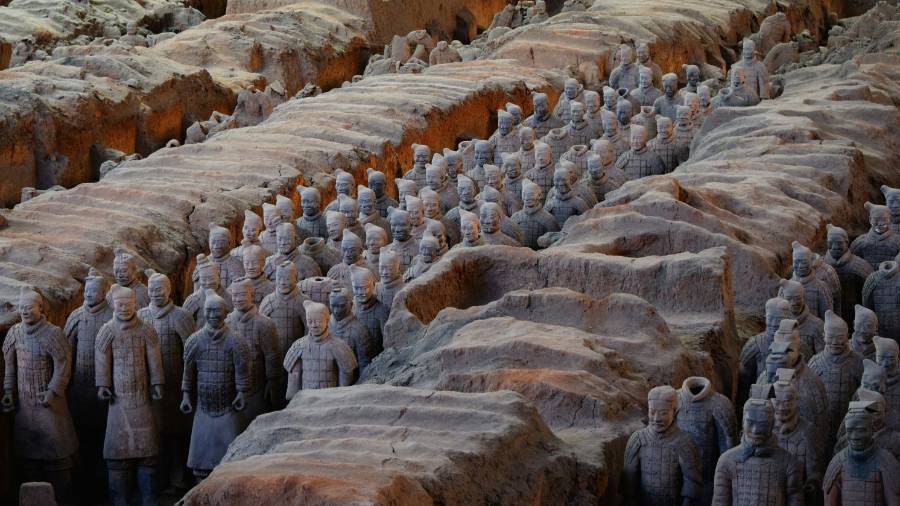
Terracotta Army

Xi’an was the starting point of the ancient Silk Road and home to one of the world’s great archaeological discoveries: the Terracotta Army. The thousands of life-size warriors, horses and chariots buried with Emperor Qin Shi Huang around 210 BCE were only uncovered in 1974, and excavation is still ongoing.

The city itself retains a remarkably complete set of ancient walls, ideal for a bicycle ride with views across the rooftops. The Muslim Quarter’s food stalls and covered bazaars make for a vivid evening out.

Places to go and things to do in Hong Kong

Hong Kong packs an enormous amount into a relatively small space. Here are some ideas to get you started.

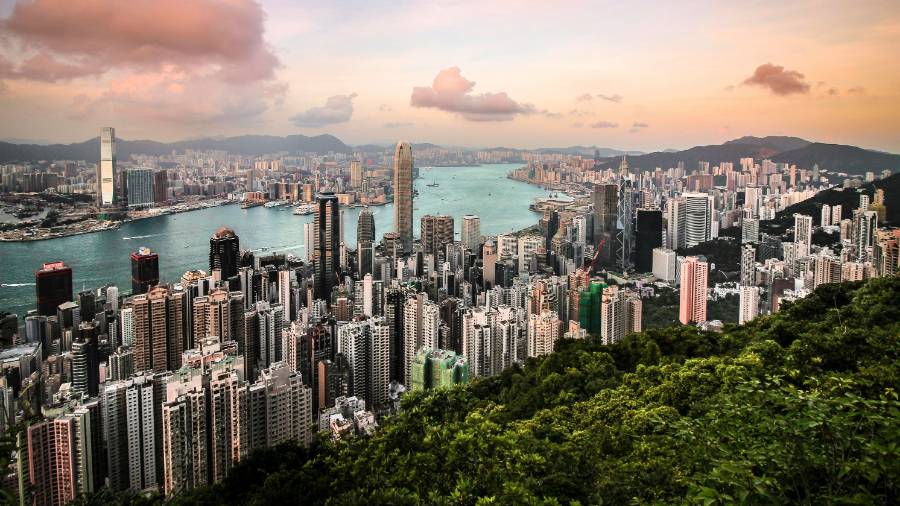
Victoria Peak

Victoria Peak Hong Kong

At 552 metres, Victoria Peak is Hong Kong’s highest point and its most famous viewpoint. The Peak Tram, recently upgraded and operating since 1888, makes the ascent an experience in itself. At the top, the panoramic views across the city, harbour and surrounding islands are awe-inspiring, particularly at night when the skyline lights up.

Victoria Harbour and the Star Ferry

The Star Ferry has been crossing Victoria Harbour since 1888, and the short crossing between Kowloon and Hong Kong Island remains one of the best-value experiences in the city. The views of the skyline from the water are iconic. Every evening at 8pm, the Symphony of Lights show illuminates the harbour’s towers in a free waterfront spectacle.

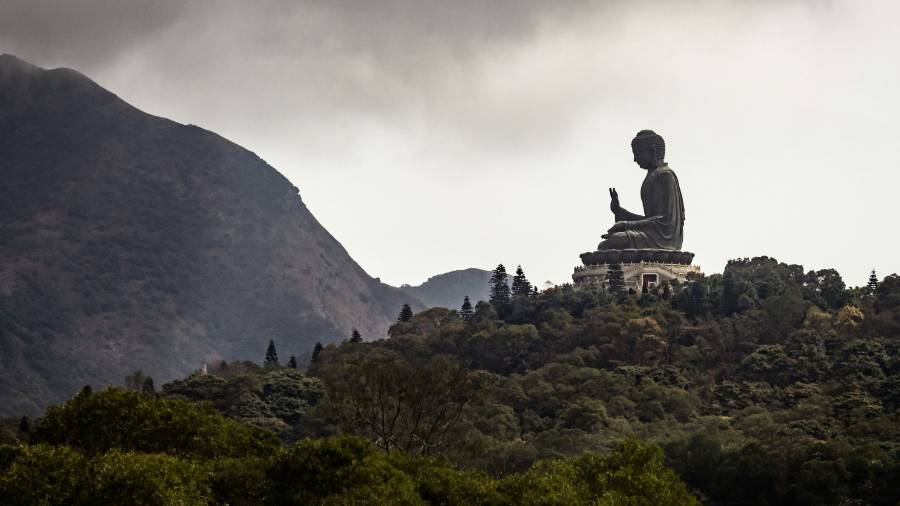
Lantau Island and the Big Buddha

Lantau Island and the Big Buddha

Tian Tan Buddha, known locally as the Big Buddha, is one of Hong Kong’s most recognisable landmarks: 34 metres tall and reached via 268 steps or a 25-minute cable car ride from Tung Chung. The journey by Ngong Ping 360 cable car, sweeping over forest and mountains before dropping into the village below the statue, is half the pleasure.

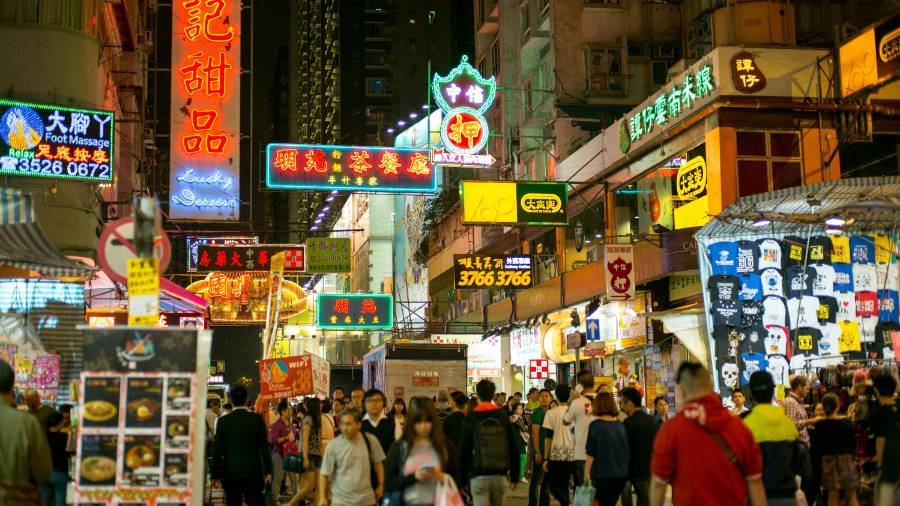
Mong Kok and the markets

Mong Kok and the markets

For a more local Hong Kong experience, Mong Kok on the Kowloon peninsula is hard to beat. Some of the most densely populated streets in the world, this neighbourhood is also home to the Temple Street Night Market, the Ladies’ Market and the Flower Market Road. It’s noisy, colourful and chaotic in the best possible way.

Hiking and the outdoors

More than 40 percent of Hong Kong’s land area is protected country park. Couple that with the mountainous terrain and you’ve got yourself a hiker’s dream. The Dragon’s Back trail on Hong Kong Island is one of the most popular routes, offering sweeping coastal views and finishing near Shek O beach. The MacLehose Trail, stretching over 100km across the New Territories, is a more serious undertaking.

How much do things cost?

Costs vary significantly between mainland China and Hong Kong. Mainland China is generally very affordable for UK visitors, while Hong Kong is more comparable to a Western European city in terms of prices.

China uses the Chinese yuan (CNY), also known as the renminbi. Hong Kong uses the Hong Kong dollar (HKD). You can see current exchange rates using our currency converter.

The following data from Numbeo gives an approximate outline of how much things cost in China and Hong Kong.

Item China Hong Kong
Three-course meal for two, no drinks ¥150 (£16.47) HK$500 (£48.31)
Regular cappuccino ¥20.24 (£2.22) HK$38.80 (£2.74)
Taxi for 1km ¥2.50 (£0.27) HK$10.50  (£1.01)


Post Office can help you prepare your travel money before you go. With our prepaid multi-currency travel card, you can load yuan and Hong Kong dollars to spend throughout your trip without conversion fees. You can top it up through an app or online if you need more.

If you prefer cash, you can exchange money at your local Post Office branch or order online for home delivery. Read our travel money tips for more advice on managing holiday expenses.

Do you need travel insurance for China and Hong Kong?

Travel insurance is recommended by the FCDO for any trip to China or Hong Kong . Neither country has a reciprocal healthcare agreement with the UK, which means there is no equivalent of the GHIC card here. If you need medical treatment, you’ll be expected to pay for it, and costs can be substantial if you require surgery.

Beyond medical cover, a trip to China typically involves significant advance spending on flights and accommodation. Travel insurance can help you recover some of those costs if you need to cancel before departure or cut your trip short, for reasons outlined in your policy. It can also help cover lost or stolen belongings, flight delays and a range of other unexpected events that can affect a long-haul trip.

What travel insurance does and doesn’t cover

What does travel insurance cover for China and Hong Kong?

Post Office Travel Insurance can help you when things don’t go to plan. It can cover:

  • Emergency medical costs: We can help pay for treatment if you’re ill or injured, and help get you home. Our policies also include 24/7 outpatient support1 for trips taken abroad, so you can speak to a medical expert in your own language through your phone
  • Cancelling or cutting your trip short: If you have to cancel or come home early for a reason listed in your policy, we’ll pay you back for unused travel and hotel bookings, up to the policy limits
  • Lost, stolen or damaged belongings: Including your suitcase, passport and money. Report any loss to the local police within 48 hours and keep the report, as you’ll need it to make a claim
  • Missed or delayed flights: If your international transport is late or you miss it for reasons outlined in your policy, we can help recover the costs. Check your policy for limits at your level of cover
  • Personal accidents and legal costs: We can help with legal fees and personal accident claims incurred while abroad

You can choose from our Economy, Standard or Premier cover levels depending on how much protection you want.

What doesn’t travel insurance cover?

There are things travel insurance won’t cover, and certain actions that can invalidate your policy. You won’t be covered if:

  • You don’t tell us about a pre-existing medical condition when taking out your policy
  • You take part in higher-risk sports or activities that are excluded from your cover
  • An incident occurs while you’re under the influence of alcohol or drugs
  • You break local laws or ignore official advice, including FCDO travel warnings
  • You miss flights or connections due to personal error, such as oversleeping

We always try to be as transparent as possible about what’s covered. You can find our full policy wording on our claims page.

What extra cover can you add?

You can add extra protection to your policy for an additional premium, including:

  • Excess waiver: So you won’t need to pay the first part of a claim
  • Gadget cover: Additional cover limits for smartphones, as well as cover for tablets, laptops and other devices
  • Trip disruption cover: In case strikes, weather events or unrest affect your plans
  • Extended trip cover: So you can travel for longer on an annual multi-trip policy
  • Cruise cover: A requirement if your trip includes a cruise

This way, you can tailor your insurance to the specifics of your trip.

Get covered for your Eastern adventure

Cover for Macau and Tibet

China’s Special Administrative Regions and autonomous territories each have their own character and, in some cases, their own entry requirements. Here’s what you need to know from an insurance perspective.

Macau

Macau, around an hour from Hong Kong by ferry, is another Special Administrative Region with its own distinct identity: part historic Portuguese colonial city, part world-leading entertainment destination. It’s covered under the same worldwide policy as mainland China and Hong Kong. As with both of those destinations, you’ll need to declare any pre-existing medical conditions and ensure your policy is in force before you travel.

Tibet

Tibet is an autonomous region of China and one of the most restricted destinations in the world for foreign visitors. UK travellers need a standard Chinese visa plus a Tibet Travel Permit, which must be arranged through a registered travel agency and cannot be applied for independently. Entry to Tibet is periodically closed to foreign tourists without prior notice, particularly around politically sensitive dates.

From a travel insurance perspective, Tibet is covered under a worldwide policy in the same way as the rest of China. However, if the FCDO advises against travel to Tibet or any part of it at the time of your trip, travelling against that advice is likely to invalidate your cover. Always check the FCDO’s China travel advice before making plans and before you depart.

Pre-existing medical conditions

There is no GHIC card for China, Hong Kong or Macau, so if you have a pre-existing medical condition, declaring it accurately when you take out your policy is particularly important. Without the safety net of any reciprocal healthcare arrangement, a medical event overseas could result in a significant bill if your policy doesn’t cover it.

At Post Office, we consider all pre-existing conditions. If we’re unable to offer you a policy, we’ll direct you to a specialist partner who may be able to help. Fill in our online form with details of your condition and we’ll let you know what we can offer.

Getting around

China has invested heavily in its transport infrastructure and getting around is generally straightforward, even on a first visit.

  • High-speed rail: China’s high-speed train network is one of the most extensive in the world, connecting major cities quickly and comfortably. Beijing to Shanghai takes around four hours. Book tickets in advance through the official 12306 platform or through a third-party booking service
  • Domestic flights: For longer journeys, such as Beijing to Chengdu or Shanghai to Xi’an, domestic flights are affordable and frequent. Competition between airlines keeps prices reasonable
  • Metro: Every major Chinese city has a modern, reliable metro system. Fares are very low and most systems have English-language signage
  • Taxi and rideshare: Taxis are plentiful and cheap by UK standards. DiDi, China’s equivalent of Uber, is widely used and has an English-language version of its app
  • Hong Kong MTR: Hong Kong’s Mass Transit Railway is fast, clean and covers the territory comprehensively. An Octopus card allows tap-and-go payment across the MTR and most other public transport

One practical note: many Western apps and websites, including Google, WhatsApp and most social media platforms, are blocked in mainland China. Consider downloading a VPN before you travel, and make sure maps, translation apps and any bookings are accessible offline or through China-compatible platforms.

Visas and entry requirements

Entry requirements differ between mainland China and Hong Kong.

Mainland China

As of February 17 2026, UK passport holders are now able to travel to China for up to 30 days without a visa, making holidays to China even easier. This includes trips for tourism, business, family visits or transit. The current arrangement is valid up until 31 December 2026.

If you’re planning to stay longer than 30 days, or if your visit is for work, study or journalism, you’ll need to apply for a visa in advance through the Chinese Embassy. Your passport must be valid for at least six months from your arrival date and have at least two blank pages.

Hong Kong

UK passport holders can enter Hong Kong visa-free for up to 180 days. Your passport must be valid for at least one month after your planned departure from Hong Kong. No advance application is required for tourist visits within this period.

Staying safe

China is generally a safe destination for UK tourists, with low levels of violent crime. That said, there are some important things to be aware of before you travel.

The FCDO advises travellers to be aware of China’s broad national security laws, which apply to foreign nationals as well as Chinese citizens. Activities that might not attract attention elsewhere, including certain social media posts, photography near government or military buildings, and discussions of politically sensitive topics, can carry legal risk in China. Always follow local laws and FCDO guidance, and be mindful of what you photograph and share online during your trip.

In Hong Kong, the FCDO also notes that the National Security Law introduced in 2020 significantly changed the legal landscape. Travellers should check the FCDO’s Hong Kong travel advice for the latest guidance.

Petty theft and pickpocketing can occur in busy tourist areas. Keep your valuables secure and be particularly careful in crowded markets and on public transport.

Emergency services in China can be reached on 110 (police), 120 (ambulance) and 119 (fire). In Hong Kong, the emergency number is 999.

Checklist for visiting China and Hong Kong

  • Get travel insurance that covers everything you want to do on your trip, and check the FCDO advice page before you depart
  • Check your passport is valid for at least six months from arrival in mainland China, or at least one month beyond your departure from Hong Kong
  • For mainland China, confirm the current visa-free entry arrangement is still in place before you travel
  • If visiting Tibet, arrange your Tibet Travel Permit through a registered agency well in advance
  • Download a VPN and any essential apps before entering mainland China, where many western platforms are blocked
  • Prepare your travel money with yuan for mainland China and Hong Kong dollars for Hong Kong
  • Save emergency numbers in your phone: 110 (China police), 120 (China ambulance), 999 (Hong Kong)
  • Print a copy of your travel insurance policy and keep emergency contact numbers to hand

Key takeaways

  • China and Hong Kong offer extraordinary experiences, from ancient imperial sites and mountain landscapes to one of the world’s great city destinations
  • There is no GHIC card for China, Hong Kong or Macau, making travel insurance essential for helping to cover medical costs
  • UK passport holders can currently enter mainland China visa-free for up to 30 days (until 31 December 2026); Hong Kong allows up to 180 days visa-free
  • Familiarise yourself with China’s national security laws before you travel and follow FCDO guidance throughout your trip
  • Make sure any pre-existing conditions are declared when you take out your policy

Get peace of mind for your China and Hong Kong trip

Common questions about travel to China and Hong Kong

  • Travel insurance is recommended by the FCDO. Neither China nor Hong Kong has a reciprocal healthcare agreement with the UK, so there’s no GHIC card or equivalent to fall back on. If you need medical treatment, you’ll need to pay for it. Travel insurance can help cover those costs, as well as a range of other unexpected events like trip cancellations, lost baggage and flight delays.

  • From an insurance perspective, both are covered under a worldwide policy with Post Office. The main practical difference is that Hong Kong has its own separate immigration controls, entry requirements and legal framework. You’ll need to check in with Hong Kong immigration separately when crossing the border, and the FCDO issues separate travel advice for Hong Kong and mainland China.

  • Yes. At Post Office we consider all pre-existing conditions. You’ll need to declare any conditions when you take out your policy, and your premium may be affected. If we’re unable to offer you a policy, we’ll point you towards a specialist provider who may be able to help. Given that there’s no GHIC card for China, accurate disclosure is particularly important.

  • Until 31 December 2026, UK passport holders can enter mainland China visa-free for stays of up to 30 days for tourism, business, family visits or transit. For longer stays or other purposes, you’ll need to apply for a visa in advance. Always check the FCDO’s China entry requirements page for the latest information before you travel, as the rules can change.

Footnotes

1Medical Assistance Plus is not available for trips taken in the UK, only for international travel. The service allows up to 3 separate medical events per person listed on the policy, and up to 3 appointments per event. All appointment charges are covered by your travel insurance policy. You will not need to pay any excess fees for this service. You may need to pay for your prescription upfront and claim on your return home.