
1. Get travel money before you go
Don’t wait until you’re at the airport before getting foreign currency. High exchange rates and extra fees can quickly eat into your travel budget, leaving you with less money to spend.
To avoid this, local cash can be handy for small, immediate purchases, such as snacks or paying for public transport, and to tip staff. But try not to carry lots of cash, in case it gets lost or stolen. For a safer way to pay, take a prepaid travel card or credit card with you as well.
2. Choose the right travel card
Thinking about getting a prepaid travel card? These cards allow you to load them with a specific amount of money in your chosen currency at a fixed exchange rate. They can offer you the convenience of card payments without the worry of fluctuating exchange rates. Travel cards can also be frozen or blocked if they are lost or stolen and, in some cases, you might be able to quickly get a replacement card too.
But remember, different cards come with different features, so it’s a good idea to do your own research and compare options before choosing one.
For example, the Post Office Travel Money Card is a convenient, prepaid and reloadable currency card designed for spending abroad. It carries up to 22 currencies, and you can lock in exchange rates whenever you top up. The card is accepted in millions of locations, from shops and restaurants to ATMs. You can top up and manage your card on our free travel app, making it easy, flexible and reliable option for holidaymakers and travellers alike.
3. Use your credit card carefully
Using a credit card abroad can be handy. They're accepted almost anywhere and often offer good exchange rates. You’ll also be protected if something goes wrong with purchases between £100 and £30,000. Plus, credit cards can be easily blocked if they’re lost or stolen.
If you choose to take your credit card abroad, always pay in the local currency to avoid bad exchange rates. And remember, if you withdraw cash from a foreign ATM, you’ll usually be charged interest until you pay it back. This is sometimes at a higher rate than the interest on purchases, which could end up being costly. For that reason alone, it could be wise to use a prepaid travel card instead.
You should also spend with care to make sure you don’t go over your credit limit. Try to pay off your balance in full each month or, at the very least, make the minimum monthly repayments so you don't impact your credit score.
4. Withdraw cash wisely
As mentioned earlier, using your credit card to withdraw cash from an international ATMs often comes with hefty interest fees. Many debit cards will also charge you for using ATMs abroad. In fact, some foreign ATMS will charge you for taking out cash, regardless of which card you use.
So, what steps can you take? Before you travel, check if your bank has partnerships with any international banks. If they do, you might benefit from fee-free or reduced-fee cash withdrawals.
Once you’re at your destination, prioritise using ATMs from major banks. They often offer lower fees and better exchange rates than independent ATMs or those located in tourist hotspots. It’s also a good idea to withdraw larger amounts less frequently, rather than making lots of small withdrawals, to help you spend less on fees.
5. Keep your travel money safe
Carrying cash, cards or both? Whatever your preference, it’s important to keep your travel money safe while travelling. A good tip is not to carry all your money at once. Keep some with you in a secure purse or wallet and leave the rest in a locked safe at your accommodation. If your room doesn’t have a safe, you can often ask reception, and they can lock it away for you. Be aware that if you don’t store your money in a locked safe and it goes missing, your travel insurance provider may not be able to offer cover.
Make sure everyone in your group shares the responsibility and don’t let just one person carry all the cash.
Tourist hotspots can be full of opportunists, so stay alert, especially in crowded areas. If your cash gets lost or stolen, you might be covered by your travel insurance so check with your provider. If your card goes missing, you should be able to block it through an app or by calling your bank. They might even be able to help you with emergency cash or a replacement card. You could also bring a back-up card with you, just in case.
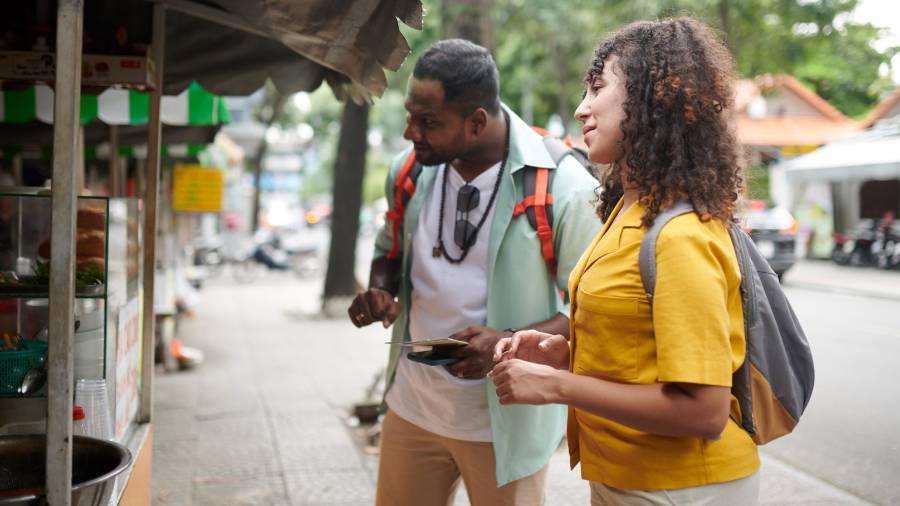
6. Save money when using your phone abroad
Using your phone abroad can lead to high roaming fees, so it’s important to check your network provider’s policy before jetting away to your destination.
If you’re travelling within Europe:
- Your phone will switch to roaming, meaning it will connect to a local network. Some networks now charge roaming fees post-Brexit. These charges vary, and your data usage might be capped too. Many networks still allow you to use your UK minutes and texts without extra charges, but they might also limit your daily data use
If you’re travelling outside of Europe:
- Expect higher charges. Check with your provider about data bundles, which are often cheaper than standard roaming rates. Remember to cancel the bundle when you’re back home. If you don’t want to pay for a bundle, try using your phone only on free Wi-Fi. You should also turn off mobile data when offline to avoid surprise charges
Whether you’re travelling within or outside Europe, another option is to use a travel eSIM. This is a digital SIM card that lets you connect to local networks and switch between them easily, without needing a physical SIM. It’s a handy and affordable choice for frequent travellers who want to stay connected without having to deal with expensive roaming fees.
7. Avoid overpaying abroad
Tourist areas can be pricey, but there’s a few ways you can get the most for your money.
Start by researching and comparing options before booking things like guided tours or car rentals. Booking ahead can also help you find better deals. You might want to also avoid firms in popular tourist spots, where prices are usually higher.
When you’re shopping for souvenirs, haggling is common in some place, especially markets. Just make sure to be respectful and get clued up on local customers. For meals, try local spots instead of restaurants in busy tourist areas, which can overcharge.
8. Track your spending
It's fun to treat yourself while traveling, but make sure you’re not overspending. Setting a daily budget can help you stay on track, so you don’t run out of money halfway through your trip.
Some prepaid travel cards, like our Travel Money Card, come with an app that makes it easy to manage your money. You can keep an eye on your spending, add more funds, switch between currencies and more. If you’re using a credit card, your banking app likely has tools to help you monitor your spending too.
Another option is to download a budget tracking app to help you stay on top of your holiday expenses.
Read our guide: savvy holiday spending with the Post Office travel app
9. Sell your local currency when you return
When you return from your trip, sell back any notes you don’t need so you have money ready for a future holiday. Store any leftover coins, as they might be useful if you visit the same country again. Simply pop them in an envelope and label them with the country’s name, ready for your next trip.
If you have any leftover money on your Travel Money Card, you can leave it there for another holiday. Or, visit any Post Office branch and withdraw the balance in Sterling, with a daily limit of £300.
You can also spend your remaining balance in the UK, and we’ll automatically convert it to Sterling whenever you make a payment. For a refund, feel free to call us. But you'll generally get a better exchange rate by spending on your card or withdrawing cash at a Post Office branch.


