Singapore travel insurance

Plan your trip to the Lion City with confidence, with our guide on what to see, local laws to be aware of and why insurance is advised by the FCDO.

Last updated: 19/6/2026

Singapore travel insurance

Set yourself up for Singapore

From the glittering skyline of Marina Bay to the chaotic brilliance of a hawker centre at lunchtime, Singapore is one of those places that gets under your skin quickly. This guide aims to cover the fun stuff as well as the more practical side of planning, including why travel insurance is so useful.

Places to go and things to do in Singapore

1. Gardens by the Bay
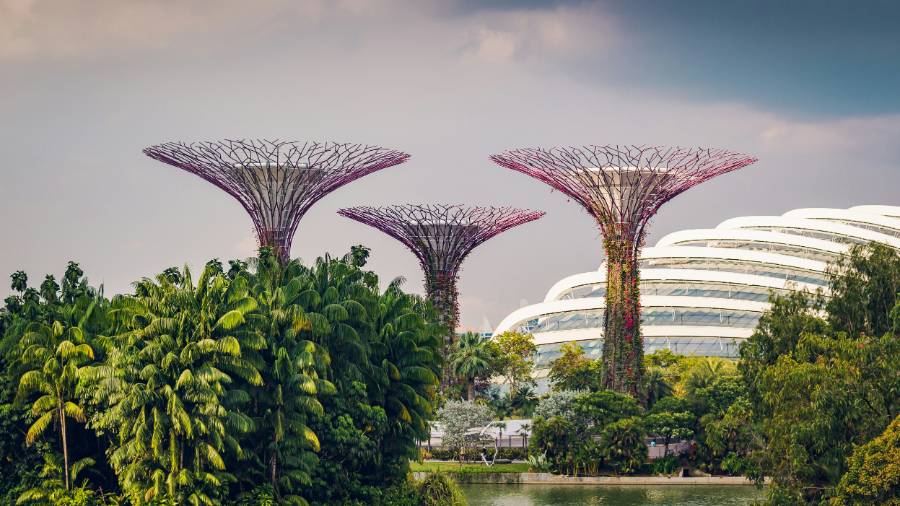
Gardens by the Bay - Singapore

One of Singapore’s most iconic sights, this vast nature park on the waterfront is home to the spectacular Supertree Grove, a cluster of enormous tree-like vertical gardens that light up at night in a dazzling sound and light show. The two conservatories, Flower Dome and Cloud Forest, are well worth a few hours of your time. The area encapsulates Singapore’s futuristic identity, combining striking modern architecture with vibrant nature.

2. Marina Bay Sands
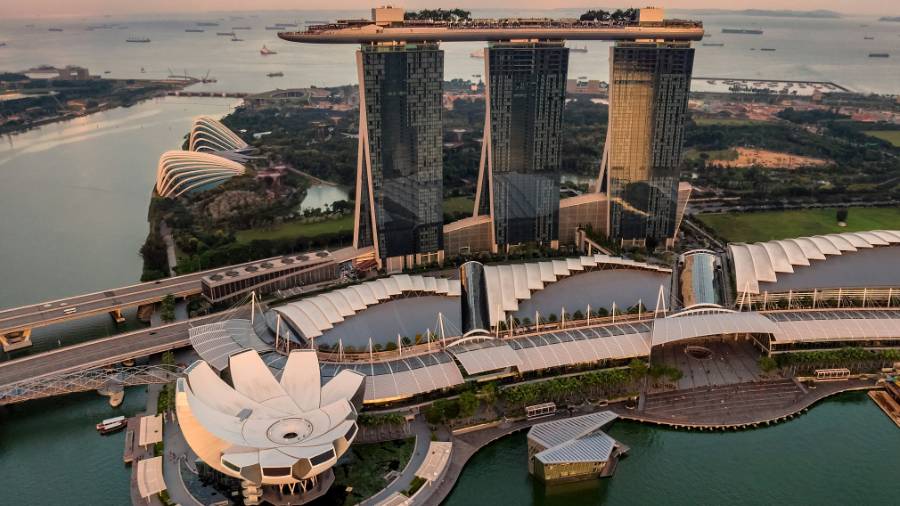
Marina Bay Sands - Singapore

The three-towered hotel with its famous rooftop SkyPark is one of the most recognisable buildings in Asia. Non-guests can visit the SkyPark Observation Deck for panoramic views across the city, the harbour and on a clear day, all the way into Malaysia and Indonesia.

3. Sentosa Island

Connected to the mainland by a short cable car, bridge or monorail, Sentosa is Singapore’s playground. With Universal Studios Singapore, beautiful beaches, the Skyline Luge and countless restaurants, you’d struggle to get bored. It’s a well thought out area which caters to families and backpackers alike.

4. Chinatown and the Buddha Tooth Relic Temple
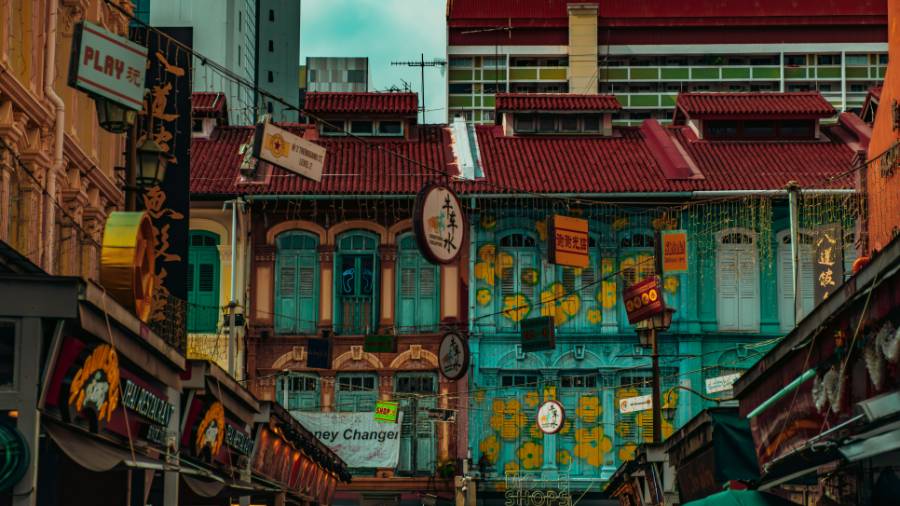
Chinatown and the Buddha Tooth Relic Temple

Singapore’s Chinatown is one of the most vibrant in Southeast Asia, a tangle of shophouses, street food stalls, temples and market vendors. The Buddha Tooth Relic Temple at its heart is a striking piece of Tang dynasty architecture and houses an extraordinary collection of Buddhist artefacts across four floors. When you’re done perusing, there will be a tasty lunch nearby in every direction.

5. The Singapore Zoo and Night Safari

The Singapore Zoo is consistently ranked among the world’s best, with open enclosures set within a rainforest environment. It’s home to a whopping 4,200 animals, so there’s a fair chance you’ll see something you’ve never seen before. The adjacent Night Safari is the world’s first nocturnal wildlife park, offering a completely different experience after dark on tram or on foot.

6. Little India

A short MRT ride from the centre and you’re in a completely different world. Little India developed through communities of Indian migrants coming to Singapore as cattle traders in the 19th century, before then moving into other areas of business. There became an increasing need to supply these migrants with the tastes of their homeland, and still today Serangoon Road is alive with colour, the scent of incense and fresh jasmine, and some of the best South Asian food in the city. The Sri Veeramakaliamman Temple, one of the oldest in Singapore, is a must-see.

7. Hawker centres
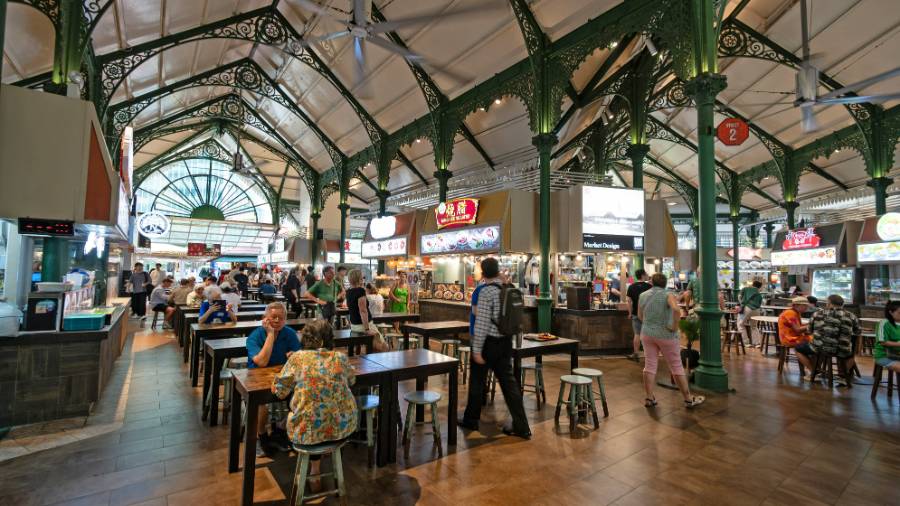
Hawker centres - Singapore

Don’t leave without spending serious time in Singapore’s hawker centres. These open-air food courts are the heart of local life, serving extraordinary food at low prices. Maxwell Food Centre, Lau Pa Sat and Old Airport Road are three of the best. Hainanese chicken rice, laksa and char kway teow are all dishes to be on the lookout for.

8. Kampong Glam

Singapore’s Malay quarter is anchored by the gold-domed Sultan Mosque, one of the city’s most beautiful buildings. The surrounding streets, especially the narrow and colourful Haji Lane, are lined with independent boutiques, street art and excellent cafes.
 

9. The Singapore Botanic Gardens
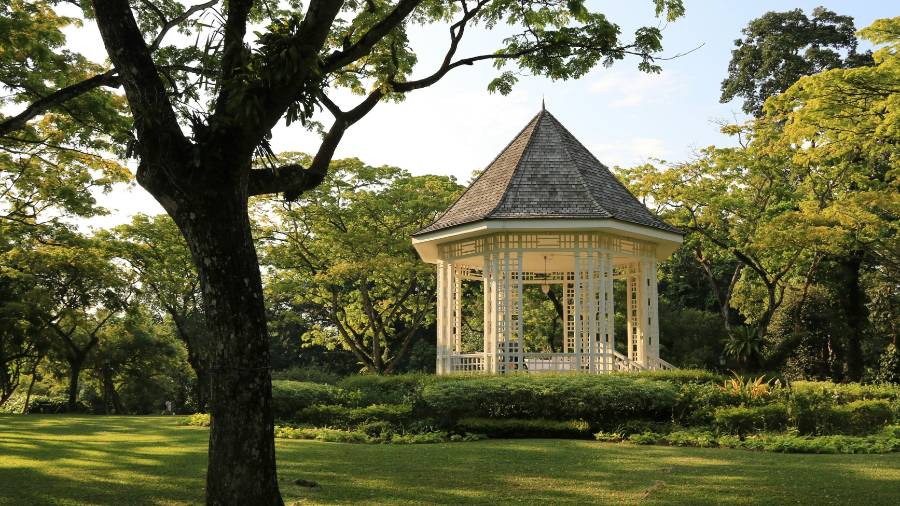
The Singapore Botanic Gardens

A UNESCO World Heritage Site and one of the oldest in Asia, the Botanic Gardens show how Singapore is more than just impressive skyscrapers. The gardens are free to enter and offer a green escape from the city’s intensity. The National Orchid Garden within the park holds the world’s largest orchid display. This part does require a small entrance fee, but it’s worth it.

10. Clarke Quay and the Singapore River

The riverfront district of Clarke Quay is a great base for an evening out, with restaurants, bars and clubs in converted warehouses along the water. A bumboat river cruise at dusk is a lovely way to see a side of Singapore that’s easy to miss on foot.

How much do things cost in Singapore?

Singapore is one of Asia’s more expensive destinations. As a financial hub and global city, expect prices for restaurants, hotels and attractions to be broadly comparable with major Western European cities. That said, if you know where to eat (hawker centres), travel (the MRT) and spend your time (some of Singapore’s best sights are free or low cost), you can keep daily costs very manageable.

Singapore’s currency is the Singapore dollar (SGD). You can check today’s exchange rate using our currency converter.

Numbeo has collated data on average prices in Singapore. The below is accurate as of June 2026.

  • Three-course meal for two (no drinks): Approx $80 (£46.39)
  • Regular cappuccino: Approx $6.34 (£3.67)
  • One-way ticket on local transport: Approx $2 (£1.15)

Post Office can also help you get your travel money sorted before you leave. With our prepaid multi-currency travel card you can load Singapore dollars and spend throughout your trip without conversion fees. You can top it up through an app or online if you run low. If you’d prefer to travel with cash, you can exchange money at your local Post Office branch or order online for home delivery. Find more in our travel money tips.

Do you need travel insurance for Singapore?

Travel insurance isn’t a legal requirement to enter Singapore, but it’s recommended by the FCDO. Singapore has world-class healthcare facilities, but they come at a significant cost. Foreign visitors are often taken to private hospitals, and if you’re in need of urgent medical care, you might not be in the position to insist where you want treatment from.

Some private hospitals may ask for proof of insurance or upfront payment before admitting a patient. If the worst should happen, you’re not going to want to shop around for a more ‘affordable’ hospital, you’ll just want to be treated. Insurance helps give you the peace of mind that if you need medical help, you can get it, and avoid coming home to an eye-watering bill.

Beyond medical cover, a trip to Singapore often involves booking long-haul flights and accommodation well in advance. Travel insurance can help you recover those costs if you need to cancel before you go or come home early. It can also cover lost or stolen belongings, travel delays and a range of other events that can disrupt even a well-planned trip. You’ll find details about cover and the limits involved in your policy documentation, so you’ll know what’s included before you set off.

Can I use a GHIC card in Singapore?

No. Your Global Health Insurance Card (GHIC) only works in countries that have a reciprocal healthcare agreement with the UK, primarily within the European Economic Area. Singapore has no such agreement, which means there’s no equivalent of free or subsidised emergency treatment for UK visitors. If you need medical care in Singapore, you’ll be paying for it, which makes a solid travel insurance policy all the more important. Even a minor injury or illness requiring hospital treatment can quickly result in a significant bill.

What does and doesn’t travel insurance cover for Singapore?

What does travel insurance cover for Singapore?

Post Office Travel Insurance can help you when things don’t go to plan. Here’s what’s included. Limits apply and not every situation will be covered, so it’s worth checking the full policy details before you travel.

  • Emergency medical treatment and repatriation: Cover for unexpected medical costs, including getting you home safely if needed. All policies also include Medical Assistance Plus1, giving you 24/7 access to an English-speaking doctor via your phone for international trips
  • Cancellation and curtailment: If illness, injury or another covered reason means you can’t travel or have to come home early, we can help you recover certain costs
  • Lost, stolen or damaged belongings: Including luggage, passport and money. Report any loss to the local police within 48 hours and keep the report, as you’ll need it to make a claim
  • Travel delays and missed connections: If your international transport is delayed or you miss a connection for a reason covered by your policy, we can help with the costs
  • Personal liability and legal costs: Protection if you accidentally cause injury to someone or damage their property

What doesn’t travel insurance cover for Singapore?

There are situations where you won’t be covered. It’s important to understand these before you travel:

  • Undeclared pre-existing medical conditions at the time of taking out your policy
  • High-risk sports and activities not included in your level of cover
  • Incidents that occur while under the influence of alcohol or drugs
  • Any claim related to breaking local laws, including Singapore’s strict drug laws
  • Missed flights or connections due to personal error

We have a document with all policy wording on our make a claim page so you know exactly what is and isn’t covered. It’s available online, whether you’ve bought a policy or not.

What extra cover can you add?

You can tailor your policy with optional add-ons to suit your specific trip. These add-ons are available for an additional cost. You’ll find more information on limits and cover on the dedicated page for each add-on.  

  • Excess waiver: Remove the excess you’d pay when making a claim
  • Gadget cover: Increase your cover for smartphones, laptops, cameras and other devices
  • Trip disruption cover: Protection against strikes, weather events or other disruptions to your plans
  • Cruise cover: Required if your trip includes a cruise. Singapore is a popular departure point for cruises around Southeast Asia
  • Trip extension cover: Extends your annual multi-trip policy to cover trips longer than 31 days

Get covered for your Singapore adventure

Using Singapore as a base for multi-country travel

Singapore’s position at the southern tip of the Malay Peninsula makes it one of Asia’s great travel hubs. Changi Airport is widely regarded as the world’s best, and from it you can reach Bali, Bangkok, Kuala Lumpur, Ho Chi Minh City, Phuket and countless other destinations in as little as one to two hours. Many UK visitors build their Singapore trip into a wider Southeast Asia itinerary, spending a few days in the city before heading further afield.

If that’s your plan, it’s important to make sure your travel insurance covers Singapore as well as your ultimate destination. With Post Office Travel Insurance, a worldwide policy covers you across multiple destinations on the same trip. Check that each country you’re visiting is included in your level of cover before you book.

If you’re visiting other countries nearby, you might also find our guides to travel insurance for China, travel insurance for Vietnam and travel insurance for Thailand useful reading.

Annual multi-trip cover for frequent Asia travellers

If Singapore is one of several trips you take in a year, an annual multi-trip policy can be a more cost-effective option than arranging separate insurance each time. It covers an unlimited number of trips within a 12-month period, removing the hassle of remembering to insure each booking individually. Individual trips are covered up to 31 days as standard, with trip extension cover available for longer stays.

Laws and customs to know before you go

Singapore has a well-earned reputation as one of the world’s safest and cleanest cities. A large part of that reputation comes from its strict laws and robust enforcement. As a visitor, it’s important to understand the rules, since breaking them, even unknowingly, can result in serious consequences and could invalidate your travel insurance.

  • Drugs: Singapore has some of the toughest drug laws in the world. Possession carries severe penalties. Trafficking certain quantities carries a mandatory death sentence. Crucially, having drugs in your system on arrival or in transit can lead to arrest or refusal of entry, even if you consumed them before leaving the UK.
  • Vaping and e-cigarettes: Vaping is completely illegal in Singapore. All vapes and e-cigarettes are banned, including those brought in by tourists. As of September 2025, stricter enforcement and penalties are in place.
  • Chewing gum: The import and sale of chewing gum is prohibited. There are exceptions for therapeutic gum available from pharmacies, but as a rule it’s best to leave it at home.
  • Littering and jaywalking: Both carry fines. Singapore takes public cleanliness seriously and enforcement is genuine, not just theoretical.
  • Drunk and disorderly conduct: Serious fines or imprisonment can apply. Alcohol is only permitted in public spaces during specific hours, and certain areas have alcohol restrictions after 10:30pm.
  • Photography: Take care around government buildings, military installations and Changi Airport. Photography in these areas may be restricted.

Always check the FCDO’s Singapore travel advice page for the latest guidance before you travel.

Getting around Singapore

Singapore is a compact city-state with excellent public transport. You don’t need a car and you’ll rarely need a taxi for getting between main attractions.

  • MRT: Singapore’s Mass Rapid Transit is clean, cheap, air-conditioned and covers the city comprehensively. A contactless UK bank card works on the MRT and most buses, or you can pick up an EZ-Link card from MRT stations.
  • Bus: The bus network fills in the gaps the MRT doesn’t reach. Google Maps works well for navigation across both.
  • Grab: Southeast Asia’s answer to Uber is reliable, safe and typically cheaper than traditional taxis. Download the app before you travel.
  • Walking: Singapore’s main tourist areas, Marina Bay, Chinatown, Kampong Glam and Little India are all walkable and connected to each other. Just be prepared for the heat.
  • Cable car and Sentosa Express: Both connect Sentosa Island to the mainland and are part of the island’s attractions in their own right.

Visas and entry requirements

UK passport holders don’t need a visa to enter Singapore for stays of up to 30 days for tourism or business. Your passport must be valid for at least six months beyond your intended departure date from Singapore.

All travellers must complete a Singapore Arrival Card (SGAC) declaration up to three days before arrival. This is done online and is free. Any website asking you to pay for this is a scam.

Check the FCDO’s Singapore entry requirements page before you travel, as rules can change. If you’re planning to stay longer than 30 days, you’ll need to arrange a visa in advance.

Checklist for Singapore

  • Explore travel insurance that covers your full itinerary, including any other countries you’re visiting
  • Check your passport is valid for at least six months after your planned departure from Singapore
  • Complete your Singapore Arrival Card (SGAC) up to three days before arrival
  • Leave chewing gum, vapes and e-cigarettes at home
  • Download Grab for taxis and Google Maps for MRT navigation
  • Sort your travel money before you go

Print or save a copy of your insurance policy and know who to call if you need to make a claim

Get peace of mind for your Singapore trip

Common questions about visiting Singapore

  • It’s not a legal requirement, but it’s recommended by the FCDO. Singapore has excellent but expensive healthcare, and there’s no reciprocal healthcare agreement with the UK, so your GHIC card won’t help you here. Without insurance, you’d be responsible for the full cost of any medical treatment, which can be substantial, particularly at private hospitals.

  • Remember that even a brief stopover carries risks. A medical emergency, a delayed flight, lost luggage or a cancelled connection can happen regardless of how long you’re in the country. With Post Office Travel Insurance, Singapore is covered under our worldwide policy whether it’s your main destination or one stop on a longer itinerary. A few days in Singapore before heading to Bali or Vietnam, for example, would all be covered under the same policy.

  • Over 100 activities are covered as standard with Post Office Travel Insurance, but there are some, such as deep-sea diving, which we don’t cover. Check your policy details carefully before you book any activities in Singapore. If you’re planning something adventurous, it’s worth confirming cover before you travel rather than after.

  • If Singapore is your only trip this year, a single-trip policy might be the straightforward choice, depending on how long you’re going for. If you travel two or more times a year, an annual multi-trip policy can work out as better value and means you’re automatically covered for every trip you take within the year. It’s particularly good value for people who use Singapore as a starting point for regular trips around Southeast Asia.

Footnotes
 

1 Medical Assistance Plus is not available for trips taken in the UK, only for international travel. The service allows up to 3 separate medical events per person listed on the policy, and up to 3 appointments per event. All appointment charges are covered by your travel insurance policy. You will not need to pay any excess fees for this service. You may need to pay for your prescription upfront and claim on your return home.