From Roman ruins on the coast to golden dunes in the Sahara, Tunisia packs an extraordinary amount into a relatively small country. This guide covers some of the best places to visit, the local laws and customs worth knowing, and how to get around once you're there. We also explain why travel insurance matters for a trip to Tunisia, so you can relax and enjoy everything the country has to offer.
Tunisia travel insurance
Prepare for your Tunisian escape with useful information on things to do, local laws and a travel insurance policy tailored to your trip.

In this guide
-
Places to go and things to do in Tunisia
-
Do you need travel insurance for Tunisia?
-
How much do things cost in Tunisia?
-
What's covered with a travel insurance policy for Tunisia?
-
What doesn't travel insurance cover for Tunisia trips?
-
What extra cover can you add?
-
Healthcare and vaccinations in Tunisia
-
Legal and cultural differences in Tunisia
-
Getting around Tunisia
-
Visas and entry requirements
-
Why Post Office?
Places to go and things to do in Tunisia
Tunis medina
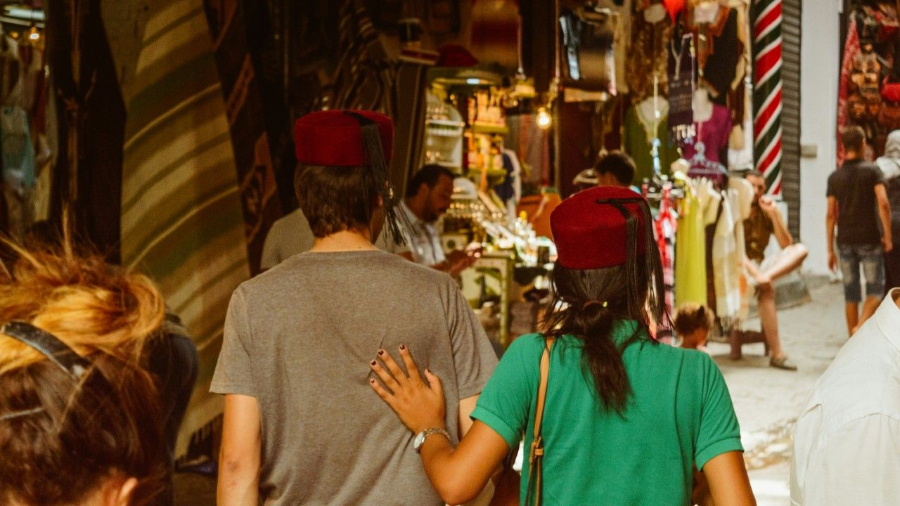
The medina in Tunis is one of the best preserved old towns in the Arab world, and another UNESCO-listed site. Its narrow, covered lanes are packed with souks selling everything from spices and leather goods to traditional chechia hats. Getting a little lost here is half the fun, and there's usually a rooftop cafe nearby to help you get your bearings. Be prepared to haggle, as it’s expected here.
Carthage
Once the seat of a great Phoenician empire that rivalled Rome itself, Carthage now sits as a UNESCO-listed archaeological site on the outskirts of Tunis. You can wander the remains of Roman villas and bath houses, including the Antonine Baths, one of the largest Roman bath complexes ever built, all while looking out over the Gulf of Tunis.
Sidi Bou Said
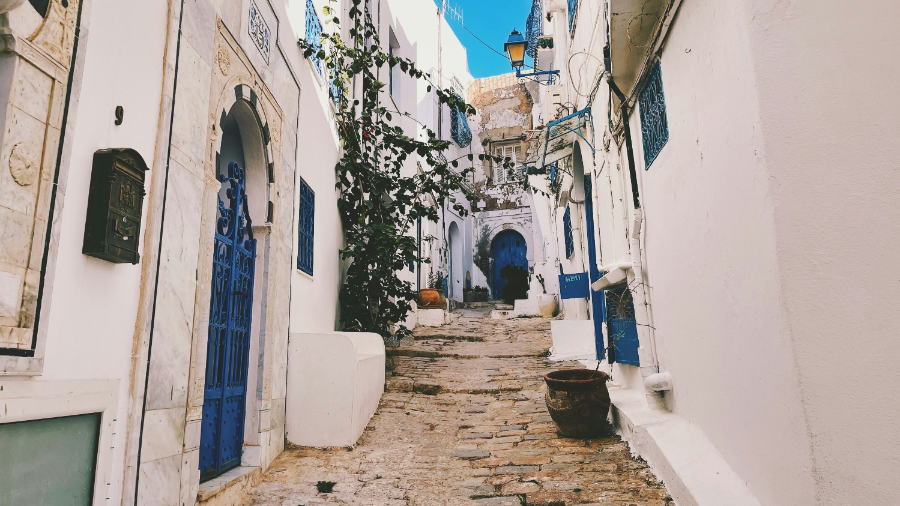
A short trip from Tunis, Sidi Bou Said is known for its whitewashed houses with bright blue doors and shutters, perched on a clifftop above the sea. It's postcard perfect, but can be quite popular, so an early morning or late afternoon visit will help you beat the crowds and catch the best light for photos.
Sahara Desert excursions
Head south towards Douz or Tozeur and the landscape shifts dramatically into the Sahara. This is the place for camel trekking and four-wheel drive dune tours, and if you can stay overnight, some of the clearest stargazing you're ever likely to see. Tozeur's old town and its palm oasis are also worth exploring before or after a desert trip.
El Djem Amphitheatre
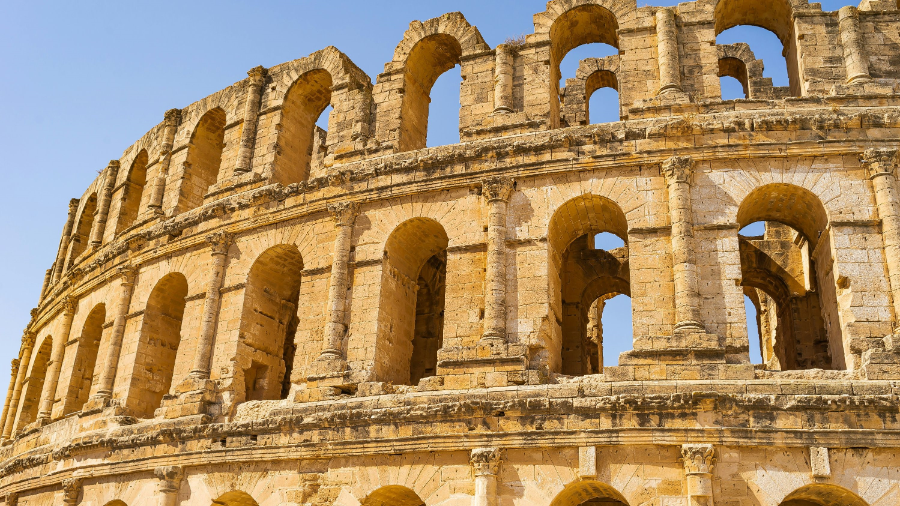
Built in the third century, the amphitheatre at El Djem is one of the best-preserved Roman colosseums anywhere in the world and another UNESCO World Heritage Site. It once held tens of thousands of spectators, and you can still walk through the underground passageways once used to bring gladiators and animals into the arena.
Matmata's underground homes
In the hills of southern Tunisia, the Berber town of Matmata is known for its cave dwellings: homes carved directly into the ground to stay cool in the desert heat. Some have been turned into guesthouses, so you can even spend a night underground. If you’re a Star Wars fan you might recognise this landscape, as it was used as a filming location for Luke Skywalker’s house.
Djerba
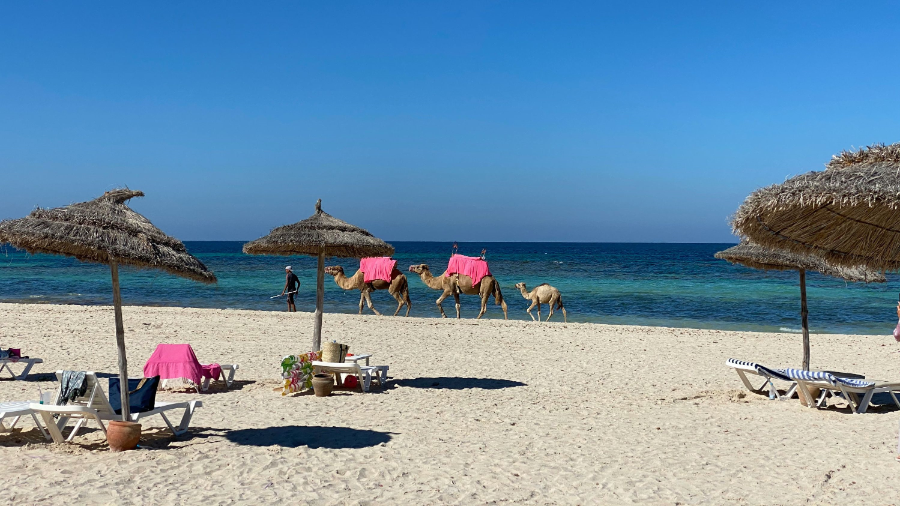
The island of Djerba, connected to the mainland by a causeway or a short ferry ride, is one of Tunisia's most popular beach destinations. Beyond the sand, it's home to the El Ghriba synagogue, one of the oldest in Africa, and Houmt Souk, a relaxed town with a good market and plenty of seafood restaurants.
Kairouan
Kairouan is considered one of the holiest cities in Islam and is home to the Great Mosque, one of the oldest and most significant in the Muslim world. The old town is also known for its carpet weaving, a craft that's been practised here for centuries.
Do you need travel insurance for Tunisia?
Travel insurance isn't a legal requirement for entering Tunisia, but the FCDO recommends that all travellers take out appropriate cover before they go.
There's no reciprocal healthcare agreement between the UK and Tunisia, so a UK Global Health Insurance Card (GHIC) won't be accepted there, even though Tunisia is included within our European travel insurance cover.
Travel insurance can also help if your trip is cancelled or cut short, your luggage is lost or delayed, or you need support after an accident.
How much do things cost in Tunisia?
Tunisia is generally an affordable destination for UK visitors, particularly once you get away from the main tourist resorts.
Tunisia's currency is the Tunisian dinar (TND). It's a closed currency, which means you can't buy it before you leave the UK or exchange leftover dinars back into pounds once you get home. You'll need to change money once you arrive, at the airport, a bank or an authorised exchange bureau, and it's worth keeping your exchange receipts in case you need to convert dinars back before you fly home.
Here are some examples of average costs in Tunisia. The data is collected by Numbeo and is accurate as of September 2026:
| Item | Approximate cost |
|---|---|
| Three course meal for 2 (no drinks) | Approx 60.00 TND (£15.18) |
| Regular cappuccino | Approx 2.88 TND (£0.73) |
| Combo meal at McDonald's (or equivalent fast-food restaurant) | Approx 15.00 TND (£3.80) |
What's covered with a travel insurance policy for Tunisia?
Post Office Travel Insurance can help when things don't go to plan. It can cover:
- Emergency medical costs: We can help pay for your treatment, for both illness and injury, and help you get back home. Our policies also include 24/7 outpatient support through Medical Assistance Plus1, so you can talk to a medical expert whenever you need to
- Missed or delayed flights: With certain levels of cover, if your international transport is late or you miss it for reasons outlined in your policy, we'll help cover the cost up to the limits of your policy
- Lost, stolen or damaged belongings: This includes your suitcase, passport and money. Check the cover limits and make sure you report any incident of theft to the police within 48 hours, as you'll need a police report and receipts to process your claim
- Personal accidents and legal costs: We can help with legal fees and personal accident claims, up to the policy limits, if you run into trouble on your Tunisia holiday
- Cancelling or cutting your trip short: If you need to cancel your trip or come home early for a reason listed in your policy, we'll pay you back for unused travel and hotel bookings up to the policy limits
You can choose our Economy, Standard or Premier cover levels depending on how much protection you want.
What doesn't travel insurance cover for Tunisia trips?
We aim to be as transparent as possible about what your policy covers, as well as things that can invalidate it. You might not be covered if:
- You don't tell us about a pre-existing medical condition when taking out your policy
- You travel to an area the FCDO advises against
- You do particular high-risk sports or activities that are exempt (you can find the full list in your policy)
- You're under the influence of alcohol or drugs when an incident occurs
- You break local laws or ignore official advice
Always read your policy carefully so you know exactly what's covered.
What extra cover can you add?
You can easily add on extra protection to your policy for an additional premium:
- Excess waiver: You won't need to pay the first part of a claim with this add-on
- Trip disruption cover: Worth considering if you're concerned about flight delays, strikes or extreme weather affecting your plans
- Gadget cover: Covering smartphones, tablets, cameras and other devices, useful if you're planning to photograph the Sahara or Carthage
- Cruise cover: A mandatory requirement if your trip includes a cruise that calls at a Tunisian port
- Winter sports cover: A mandatory requirement if you're taking part in winter sports elsewhere on the same trip
- Extended trip cover: Enabling you to travel for longer on an annual multi-trip policy
With Post Office Travel Insurance, you can tailor your cover to the specifics of your Tunisia trip.
Put cover in place for your next trip today
Healthcare and vaccinations in Tunisia
Private clinics and hospitals in Tunis and the main tourist resorts are generally well equipped, but facilities can be more limited in rural areas and the south of the country, including around the Sahara.
It's worth checking that your routine vaccinations, including tetanus, are up to date before you travel. Depending on your plans, a GP or travel clinic may also suggest vaccinations such as hepatitis A or typhoid. It's a good idea to book an appointment four to six weeks before you travel, as some vaccines need time to take effect.
With Post Office travel insurance you can also access Medical Assistance Plus1 , giving you access to an English-speaking GP 24/7 via video call for non-emergency health queries while you're away.
Legal and cultural differences in Tunisia
There are a number of differences between the UK and Tunisia that are worth knowing before you travel. Breaking local laws, even unintentionally, could invalidate your insurance policy.
- It’s advised to dress modestly when visiting mosques and other religious sites, covering your shoulders and knees. Some mosques don't allow non-Muslim visitors inside at all
- Alcohol is legal in Tunisia but is mostly sold and consumed in licensed hotels, bars and restaurants rather than openly in public
- Photographing military installations, government buildings, airports and some other infrastructure is illegal and can lead to arrest. When in doubt, ask before taking a photo
- You can't take Tunisian dinars out of the country, and you may need to declare foreign currency such as pounds sterling on arrival
- Most hotels charge a local hotel tax per person per night, payable directly to the hotel rather than in advance
- If you're visiting during Ramadan, be mindful that eating, drinking or smoking in public during daylight hours may be frowned upon in some areas, even if you're not fasting yourself
Staying safe in Tunisia
Most visits to Tunisia are trouble-free, but the FCDO advises against all travel to some parts of the country. Always check the latest FCDO travel advice for Tunisia before you go, as travelling against this advice is likely to invalidate your travel insurance.
Away from these areas, petty theft and pickpocketing can happen in busy tourist spots and markets, so keep an eye on your belongings. Emergency services in Tunisia can be reached on 197 (police), 190 (ambulance) and 198 (fire).
Getting around Tunisia
- Louage: Shared taxis called louages connect towns and cities cheaply, leaving when full rather than on a set timetable
- Train: Tunisia's rail network connects Tunis with cities including Sousse, Sfax and Monastir, and is a comfortable way to travel along the coast
- Bus: National and regional bus services cover most of the country, including many rural areas the train doesn't reach
- Car hire: Renting a car gives you the freedom to explore, but roads outside the main cities and resorts can be poorly maintained and driving standards vary, so it's worth taking extra care, particularly at night
Visas and entry requirements
You don't need a visa to visit Tunisia as a tourist for stays of up to 90 days. Your passport should be valid for the whole of your stay.
If your passport is damaged or torn, you could run into problems leaving the country, so it's worth checking its condition before you travel.
On arrival, border officials may ask for your contact details, proof of onward or return travel, and evidence of your accommodation, so keep these details to hand.
If you're planning to stay longer than 90 days, contact the Tunisian Embassy in the UK for advice on the visa or permit you'll need.
Why Post Office?
- Tunisia is included within our European travel insurance cover, so you don't need to arrange separate worldwide cover for your trip
- We consider all pre-existing medical conditions as part of our screening process, and will point you towards a specialist provider if we're unable to help
- Kids under 18 with no medical conditions go free on family policies
- Emergency medical cover up to £5 million on Economy, rising to £15 million on Premier
- Medical Assistance Plus1 gives you access to an English-speaking GP 24/7 by video call for non-emergency health queries while you're away
Key takeaways
- Tunisia offers an unusual mix of Roman ruins, desert adventure and Mediterranean beaches, all within a few hours of each other
- Tunisia is included in our European travel insurance cover, but there's no GHIC or reciprocal healthcare agreement, so you'll need to pay for any medical treatment yourself without a valid policy
- The FCDO advises against all travel to some areas and travelling against this advice is likely to invalidate your cover
- Always declare any pre-existing medical conditions accurately when you take out your policy
Get ready for your Tunisian adventure
Common questions about travel to Tunisia
-
There is no set amount we could recommend as it’s impossible to know what might happen on your trip. Many people look to ensure that cover sections meet their specific needs as a starting point. Also bear in mind that foreign medical bills can be expensive.
-
No. There's no reciprocal healthcare agreement between the UK and Tunisia, so a UK Global Health Insurance Card (GHIC) won't be accepted there. Even though Tunisia is included within our European travel insurance cover, you'll need a policy with adequate medical cover to help pay for any treatment you need.
-
Yes. At Post Office, we consider all pre-existing medical conditions as part of our screening process. You'll need to declare any conditions when you take out your policy, and if we're not able to offer you cover, we'll point you towards a specialist provider who might be able to help.
Footnotes
1 Medical Assistance Plus is not available for trips taken in the UK, only for international travel. The service allows up to 3 separate medical events per person listed on the policy, and up to 3 appointments per event. All appointment charges are covered by your travel insurance policy. You will not need to pay any excess fees for this service. You may need to pay for your prescription upfront and claim on your return home.